Virginia has a little of everything: mountains, rolling farmland, the Chesapeake Bay, and the beach. People build here to be within reach of jobs in Northern Virginia, Richmond, and Hampton Roads while getting more space, or to settle on land in the Shenandoah Valley, the Piedmont, or around Lake Anna.
Why Build a New Home in Virginia
Virginia’s regions are very different from each other. Northern Virginia has a strong job market but expensive land. The Fredericksburg and Richmond areas offer more room and lower prices with easy access to I-95. Hampton Roads (Virginia Beach, Chesapeake, Suffolk, Newport News) is a coastal, military-heavy region. The Shenandoah Valley and Southwest Virginia have mountain views and some of the most affordable land in the state.
The climate is moderate, with four seasons, hot and humid summers, and winters that are colder and snowier in the mountains than on the coast. Growth is strongest in Loudoun, Prince William, and Stafford counties, the Fredericksburg and Spotsylvania area, the Richmond suburbs (Chesterfield, Hanover, Henrico), Charlottesville, and the Hampton Roads cities of Chesapeake and Suffolk.
Types of New Homes in Virginia
You have several options when building in Virginia. Our guide to the types of new homes explains each one.
Custom Homes on Your Own Lot
A custom home on your own land is popular across Virginia, from farmland in the Piedmont to lake lots at Lake Anna and Smith Mountain Lake to mountain property in the Shenandoah Valley. Several Virginia builders specialize in building on land the client already owns.
Builder and Tract Communities
Production builders are most active in Northern Virginia’s outer suburbs, the Fredericksburg area, the Richmond suburbs, and Hampton Roads. You choose from set floor plans and upgrades, and the builder provides the lot.
Manufactured and Modular Homes
Factory-built homes can cut costs and speed up your timeline. Modular homes are built to Virginia’s statewide building code and placed on a permanent foundation. Manufactured homes follow a federal code and are more common in rural areas, though some localities limit where they can go.
Barndominiums
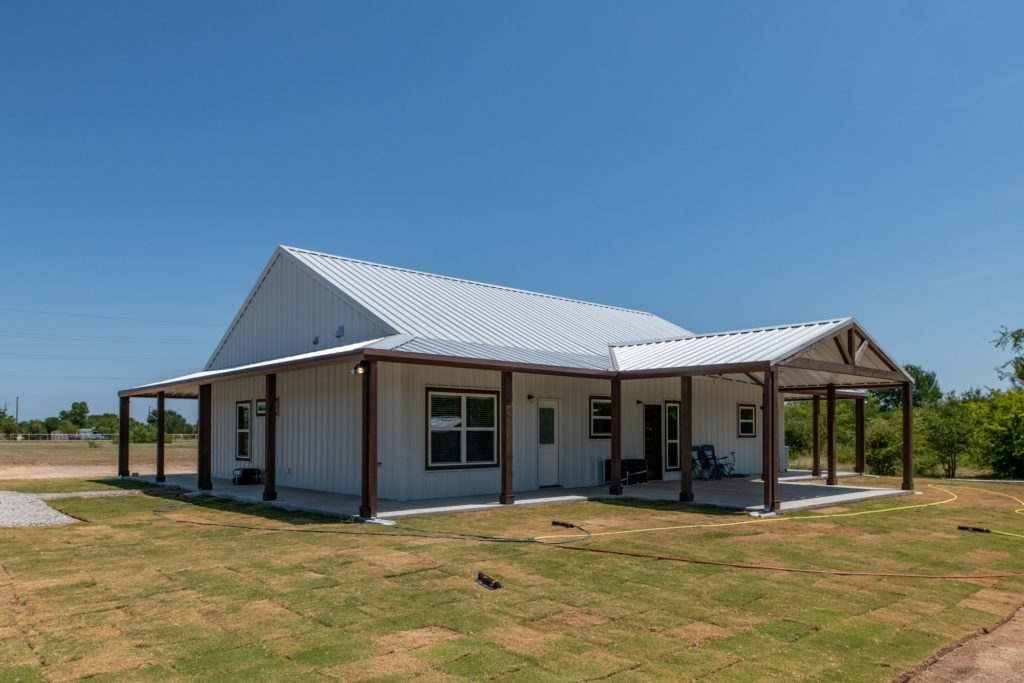
Barndominiums, barn-style homes with open interiors and often a large shop or garage, are popular in rural parts of many states, including Virginia. Most are now stick-framed (built with standard wood framing) rather than steel, which makes them easier to finance and permit like a regular house.
How Much Does It Cost to Build a Home in Virginia?
New Home Magazine estimates that building a home in Virginia costs about $165–$250 per square foot for the house itself. For a 2,000-square-foot home, that’s roughly $330,000–$500,000.
What affects cost in Virginia:
- Labor market: Costs run highest in Northern Virginia and lower in the Shenandoah Valley and Southside.
- Foundations: Frost depth is moderate but deeper in the mountains. Basements are common in Northern and Western Virginia, while crawl spaces and slabs are common near the coast.
- Coastal wind and flood rules: Hampton Roads homes may need stronger wind protection and, in flood zones, raised foundations.
- Sloped lots: Mountain and lake lots can add grading, retaining walls, and longer driveways.
The per-square-foot number covers the house only. Land, site work, a well and septic system for rural lots, utility hookups, and permits are extra. To compare, see what it costs to build a new home in all 50 states.
Custom Home Builders in Virginia
Here are some Virginia builders that build custom homes, including on land you own:
- Spear Builders (Fredericksburg and Charlottesville): Builds custom homes and barndominiums and offers a build-on-your-lot program.
- Battlefield Homes (Fredericksburg): A custom home builder serving the greater Fredericksburg area, including Lake Anna, Lake Louisa, and Lake of the Woods.
- Cedar Creek Custom Homes (Shenandoah Valley): A family-owned builder specializing in custom homes and renovations.
- Ainslie Group (Hampton Roads): Builds new and custom homes in Virginia Beach, Chesapeake, and Suffolk.
- Mitchell Homes (Fredericksburg, Richmond, and Newport News offices): Builds custom homes on your land across much of Virginia, as well as in the Carolinas and Southern Maryland.
Virginia requires contractors to hold a state license through the Department of Professional and Occupational Regulation (DPOR), with Class A, B, or C licenses based on job size. Check the license, ask for proof of insurance, call a few past clients, and tour a finished home before you sign.
Construction Loans in Virginia
A construction loan pays for your home while it’s being built, releasing money to the builder in stages as work is finished. A construction-to-permanent loan becomes a regular mortgage when the house is done, so you only close once. Learn more about how construction loans work.
FHA and VA construction loans can lower your down payment (VA loans are especially useful in Virginia, with its large military population), and USDA loans can work in rural Virginia, including much of the Shenandoah Valley, Southside, and Southwest Virginia.
Lenders that offer construction loans in Virginia include:
- Farm Credit of the Virginias: Offers home loans and construction loans for building in the country.
- First Bank & Trust Company: Offers residential construction loans, construction-to-permanent loans, and lot loans, with lenders in Virginia.
Local community banks and credit unions are also worth calling, since many make construction loans and know the local builders.
Property Taxes in Virginia
Virginia’s property taxes are about average nationally, but they’re set by each county and independent city, so rates vary widely. Northern Virginia tends to have higher bills because home values are higher, while rural counties often have lower bills. Your locality will assess your new home once it’s finished, and most localities reassess every year or every few years.
Virginia doesn’t have a general homestead exemption for property taxes. Many localities offer tax relief for seniors and people with disabilities who meet income limits, and the state exempts the primary home of qualifying 100% disabled veterans. Check with your county or city tax office.
Home Insurance in Virginia
Virginia homeowners face a range of risks depending on where they build:
- Hurricanes and coastal storms: Hampton Roads and the Eastern Shore face hurricane and nor’easter risk, and wind deductibles may apply.
- Flooding: Standard policies don’t cover floods. Flood insurance is a must in many coastal and riverside areas, including parts of Hampton Roads with tidal flooding.
- Winter storms: Snow and ice are more common in the mountains and Northern Virginia and can damage roofs and freeze pipes.
- Severe storms: Thunderstorms, hail, and occasional tornadoes happen statewide.
Get insurance quotes before you buy land, especially near the water. Our guide to home insurance for new homes has more tips.
Buying Land and Getting Permits in Virginia
Virginia has a statewide building code, the Uniform Statewide Building Code, which every locality enforces. Zoning is set by counties, cities, and towns, and most of the state has zoning, though rural areas are usually zoned for agriculture with larger minimum lot sizes.
Before you buy land, check:
- Septic: The Virginia Department of Health approves septic systems, usually after a soil evaluation. Some lots need an alternative system, which costs more.
- Water: Find out if public water is available or if you’ll need a well.
- Chesapeake Bay rules: Land near the Bay and its rivers may fall under extra rules that limit building near the water.
- Flood zones: Especially important in Hampton Roads.
- Frost depth: Moderate in most of the state but deeper in the mountains.
Read our guide on how to buy land to build a house for a full checklist.
House Plans for Your Virginia Home
Colonial and traditional homes, modern farmhouses, lake houses with walkout basements, and coastal homes with raised foundations all suit Virginia. You can browse plans for every style, then have your builder adapt the plan to your lot and local codes. For barndominium and farmhouse-style plans, visit BarndominiumPlans.com, and for barndominium inspiration, see Barndominium Life.
Final Thoughts
Virginia offers a wide range of places to build, from busy suburbs to quiet farmland and mountains. Choose a licensed builder who knows your region, check septic and flood issues early, and line up financing before you break ground.