North Carolina is one of the most popular places in the country to move to, and many newcomers decide to build. Young professionals heading to the Research Triangle and Charlotte, retirees drawn to the coast and the mountains, and families who want a few acres in the country all find good options here. This guide covers costs, builders, loans, taxes, insurance, and the land and permit steps to plan for.
Why Build a New Home in North Carolina
North Carolina offers three very different landscapes in one state: sandy coastal plains and beaches in the east, rolling Piedmont hills in the middle, and the Blue Ridge and Great Smoky Mountains in the west. That variety means you can choose a lake lot, a mountain view, a coastal setting or open farmland.
The climate is mild overall, with hot, humid summers and fairly short winters in most of the state. The mountains get colder winters and more snow, while the coast faces hurricane season. The long building season helps keep projects moving.
Growth is strong in several areas. The Triangle (Raleigh, Durham, Cary, Chapel Hill and Wake Forest) and the Charlotte region, including Lake Norman and Mooresville, are among the fastest-growing metros in the Southeast. The Triad around Greensboro and Winston-Salem, Wilmington and the southeastern coast, Greenville in the east, and Asheville and the western mountains are all busy as well. Rural land is easier to find in the eastern coastal plain and in the Piedmont outside the big metros.
Types of New Homes in North Carolina
Here’s a quick look at your options. For more detail, see our guide to types of new homes.
Custom Homes on Your Own Lot
A custom home on land you own gives you full control over the design and how the house fits the site, whether that’s a sloped mountain lot, a lake lot or a few acres in the country. Many North Carolina custom builders work with clients who already own land or help them find a homesite.
Builder and Tract Communities
Production builders build large communities around Raleigh, Charlotte, the Triad, Wilmington and other growing areas. You choose from set floor plans and options. It’s convenient, but you give up choice of lot and many design decisions, and most communities have homeowners association (HOA) fees.
Manufactured and Modular Homes
Manufactured homes (built in a factory to a federal code) and modular homes (built in sections to North Carolina’s building code) are common, especially in rural areas. Check county zoning, since some areas restrict where manufactured homes can go.
Barndominiums
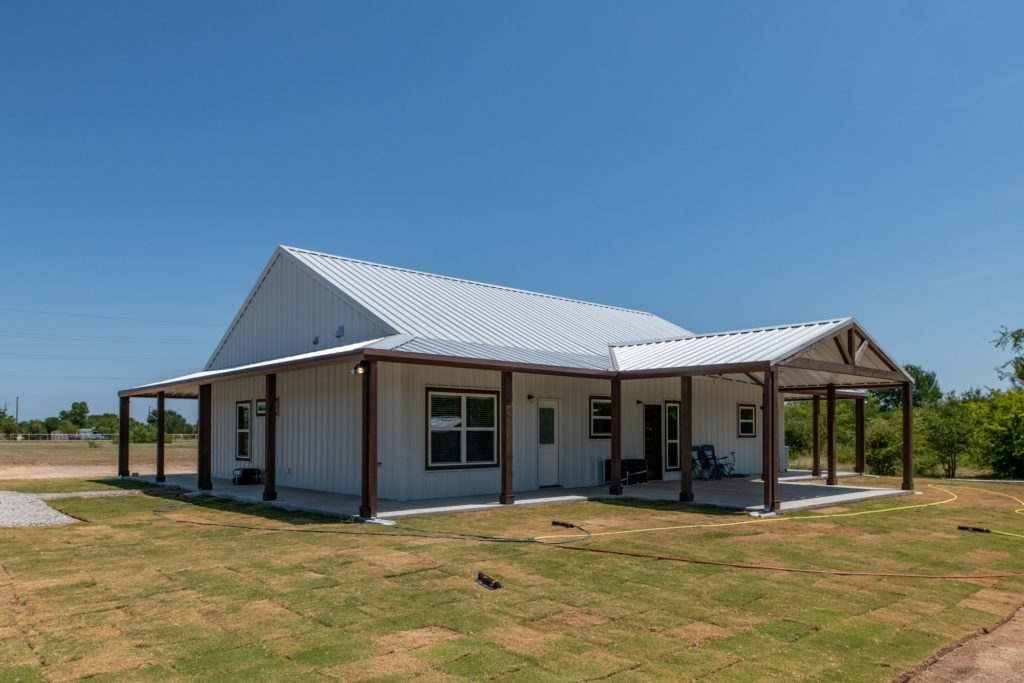
Barndominiums, homes with a barn-style look and often a large shop or garage under the same roof, are popular in rural parts of many states, including North Carolina. Most are now stick-framed (built with wood framing like a regular house), which makes them easier to finance and insure.
How Much Does It Cost to Build a Home in North Carolina?
New Home Magazine estimates that building a home in North Carolina costs about $155–$235 per square foot for the house itself. For a 2,000-square-foot home, that’s roughly $310,000–$470,000.
What drives costs up or down here:
- Location within the state: Labor and land costs are highest around Raleigh, Charlotte and the coast, and lower in rural areas.
- Coastal wind codes: Homes near the coast must meet higher wind requirements, which can mean impact-rated windows or shutters and stronger roof connections.
- Mountain sites: Steep lots can need extra excavation, retaining walls and engineered foundations.
- Foundations: Frost depth is shallow in most of the state, so slabs and crawl spaces are common and keep costs down. Basements are more common in the mountains.
- Humidity: Good moisture control, ventilation and HVAC sizing matter in North Carolina’s humid climate.
These figures cover the house only. Land, site work, wells, septic systems, utility hookups and permits are extra. To see how North Carolina compares, check what it costs to build a new home in all 50 states.
Custom Home Builders in North Carolina
Here are some North Carolina custom builders from different parts of the state. Always confirm directly that a builder will build on land you own.
- CJC Custom Homes (Raleigh / the Triangle): Builds luxury custom homes and works with clients who already own land or are looking for a homesite.
- Disney Construction Company (Oak Ridge / Greensboro area): Builds custom homes and handles remodels and additions in the Guilford County area.
- Cobble Creek Custom Homes (Lake Norman / Mooresville): Builds custom homes in modern, traditional and lakeside styles around Lake Norman.
- Biggs Construction (Winterville / Greenville area): Builds new custom homes in Pitt County, Beaufort County and the areas around Greenville and Washington.
- Castle Home Builders (Hampstead / southeastern coast): Builds energy-efficient custom homes in Pender, New Hanover and Onslow counties.
North Carolina requires builders to hold a general contractor license for larger projects, including new homes, and you can look up any license with the NC Licensing Board for General Contractors. Also ask for proof of liability and workers’ comp insurance, talk to recent clients, and visit a finished home.
Construction Loans in North Carolina
A construction loan pays your builder in stages (called “draws”) as the work is done, and you typically pay only interest during the build. A “construction-to-permanent” loan converts to a regular mortgage once the home is finished, so you only close once. Learn more in our guide to how construction loans work.
FHA and VA construction-to-permanent loans can lower your down payment if you qualify, and USDA rural housing loans are worth a look in the many rural counties of eastern and western North Carolina.
Lenders to start with:
- AgCarolina Farm Credit: Offers construction loans for building a home and serves 46 counties in central, eastern and southeastern North Carolina.
- Truliant Federal Credit Union: A credit union based in Winston-Salem that offers construction loans and land loans.
- First Citizens Bank: A bank with deep North Carolina roots that offers home construction loans.
Property Taxes in North Carolina
North Carolina’s property taxes are below the national average. Taxes are set by your county, and also by your city if you live inside city limits, so your bill depends on exactly where you build.
North Carolina doesn’t have a general homestead exemption for all homeowners. It does offer property tax relief for homeowners who are 65 or older or totally disabled and meet income limits, plus an exclusion for certain disabled veterans. Apply through your county tax office. Your new home will be assessed at its full value once it’s complete.
Home Insurance in North Carolina
Insurance risks vary a lot by region. On the coast, hurricanes, high winds and storm surge are the biggest concerns. Inland, severe thunderstorms, tornadoes and hail are common, and remnants of hurricanes can cause serious flooding far from the coast, as western North Carolina has seen. The mountains also bring landslide risk and winter ice storms.
Some practical tips:
- Get insurance quotes before you buy land, especially near the coast, where premiums and wind deductibles can be much higher.
- Ask about hurricane or wind deductibles, which are often a percentage of the home’s value.
- Standard policies don’t cover flooding. Check FEMA flood maps for your lot, and consider flood insurance even outside mapped flood zones.
- Wind-resistant construction, such as stronger roofs and impact-rated openings, may earn discounts.
- If private insurers won’t cover a coastal home, the state’s coastal insurance pool (often called the Beach Plan) may.
For more, see our guide to home insurance for new homes.
Buying Land and Getting Permits in North Carolina
Cities and many counties in North Carolina have zoning, but some rural counties have little or no countywide zoning. That gives you more freedom, but also fewer protections, so check deed restrictions, road access and HOA rules carefully.
If the land isn’t on public sewer, you’ll need a septic permit from the county health department, which will evaluate the soil first. This step is critical in North Carolina, where clay soils and high water tables can make some lots hard or expensive to build on. Have the soil evaluated before you buy. Many rural lots also need a private well.
North Carolina has a statewide residential building code that applies everywhere, and counties or cities issue permits and do inspections. Frost depth is shallow in the east and deeper in the mountains, so your local building office sets the required footing depth. For a step-by-step checklist, read how to buy land to build a house.
House Plans for Your North Carolina Home
You can browse plans for every style, from coastal cottages with deep porches to mountain homes with walkout basements. If you love the farmhouse or barndominium look, BarndominiumPlans.com has a large collection of barndominium and farmhouse-style plans, and Barndominium Life is a good place to find barndominium inspiration.
Final Thoughts
North Carolina offers mountains, coast and everything in between, with moderate building costs and below-average property taxes. Check the soil and the insurance picture before you buy land, and pick a licensed builder who knows your part of the state.