Ohio is a practical place to build a new home. Families moving to fast-growing suburbs around Columbus and Cincinnati, people building on a few acres in farm country, and buyers returning to the small towns they grew up in all find that land and building costs here are reasonable compared with the coasts. This guide covers what it costs, who builds, how to finance it, and what to know about land, taxes and insurance.
Why Build a New Home in Ohio
Land is widely available. Ohio has flat, fertile farmland across the west and north, rolling hills and woods in the southeast and Appalachian foothills, and Lake Erie shoreline in the north. Outside the big metros, rural lots and small acreage parcels are still within reach for many buyers.
The climate has four distinct seasons. Summers are warm and humid, and winters bring snow and ice, especially in the northeast “snow belt” east of Cleveland. The building season is long enough that most homes go up in well under a year, but winter can slow site work.
Growth is strongest around Columbus, where new jobs have pushed construction into Delaware, Union, Licking, Fairfield and Pickaway counties. The Cincinnati suburbs (especially Warren and Butler counties), the Dayton area, and the suburbs south and west of Cleveland and Akron are also busy. Smaller cities like Findlay, Wooster and Athens have steady demand too.
Types of New Homes in Ohio
There are several ways to get a new home in Ohio. For a full comparison, see our guide to types of new homes.
Custom Homes on Your Own Lot
Building a custom home on land you own is especially popular in Ohio, and the state has a strong network of builders who specialize in it. You buy the land (or already own it), choose or design a plan, and hire a builder. You get to decide the layout, the finishes, and where the house sits on the property.
Builder and Tract Communities
Production builders work in planned subdivisions, mostly in the suburbs of Columbus, Cincinnati, Dayton and Cleveland. You pick from set floor plans and options. It’s usually quicker and simpler, but you give up the choice of lot and many design decisions.
Manufactured and Modular Homes
Manufactured homes are built in a factory to a federal HUD code and are the most affordable way into a new home. Modular homes are also factory-built but meet the same codes as site-built homes and are set on a permanent foundation, so lenders and appraisers generally treat them like regular houses.
Barndominiums
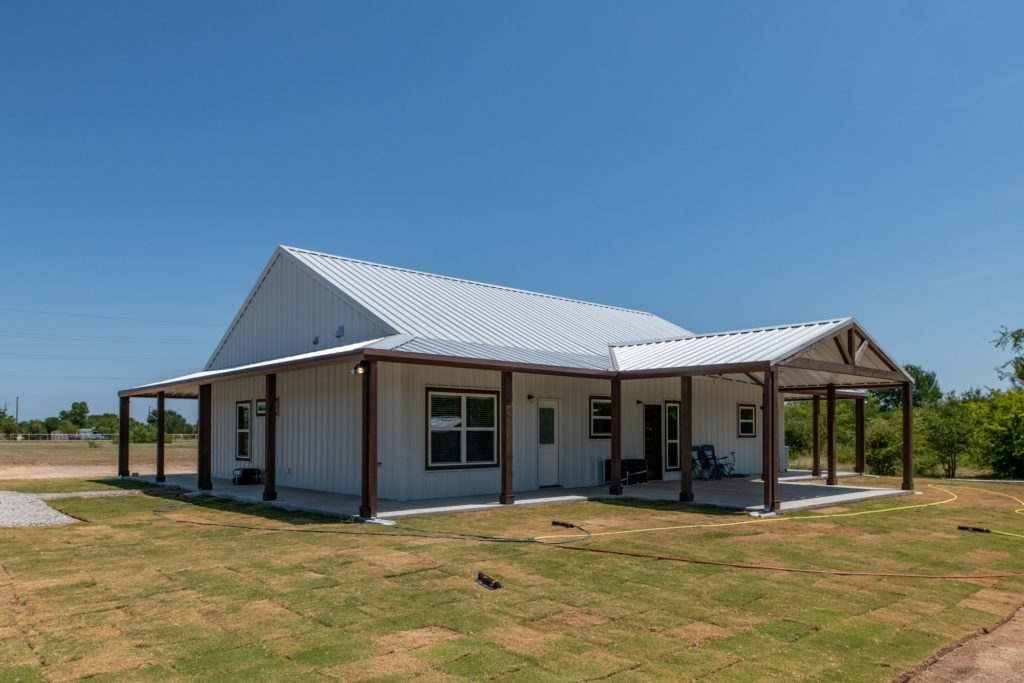
Barndominiums (barn-style homes, often with a big shop or garage under the same roof) are popular in rural parts of many states, including Ohio’s farm country. Most are now stick-framed like a standard house and finished with metal siding and roofing, which makes them easier to finance and insure.
How Much Does It Cost to Build a Home in Ohio?
New Home Magazine estimates that building a new home in Ohio costs about $185–$285 per square foot for the house itself. For a 2,000-square-foot home, that’s roughly $370,000–$570,000. These are our estimates; the plan, finishes and builder will determine your real number.
What drives Ohio costs:
- Frost depth and basements: Footings must go below the frost line, typically about 32 to 36 inches, and many Ohio homes include a full basement.
- Labor market: Builders around Columbus and Cincinnati are busy, which can push prices and timelines up. Rural areas can be cheaper.
- Soil and slope: Clay soils in parts of the state and hilly sites in southeast Ohio can add drainage and foundation costs.
- Snow loads: Homes in the northeast snow belt need roofs designed for heavier snow.
Land, site work, a well and septic system, utility hookups and permits are all extra. To compare Ohio with other states, see what it costs to build a new home in all 50 states.
Custom Home Builders in Ohio
Here are some Ohio builders that build custom homes, including on land their clients own:
- Regent Homes (Central Ohio): Builds custom and semi-custom homes around Columbus and helps with clearing, grading, septic and utilities when you build on your own lot.
- Justin Doyle Homes (Greater Cincinnati and Dayton): Builds custom ranch and luxury homes, and building on clients’ own land makes up a big part of its work.
- Our House Custom Homes (Northeast Ohio): Builds custom homes in the Cleveland, Akron, Canton and Medina areas on your lot or theirs.
- Wayne Homes (multiple Ohio regions): A regional custom builder that builds on your lot in select counties in Ohio and neighboring states.
- DiYanni Custom Homes (Cincinnati, Columbus, Cleveland and more): Builds custom luxury homes and reviews your property for buildability and site costs before you commit.
Ohio doesn’t license general residential contractors at the state level, though electrical, plumbing and HVAC contractors are state-licensed, and many cities require builders to register locally. Ask any builder for proof of liability and workers’ comp insurance, call recent clients, and visit a home they’ve finished.
Construction Loans in Ohio
A construction loan pays your builder in stages (called draws) as work is completed. You usually make interest-only payments during the build, and many lenders offer a one-time close loan that converts into a regular mortgage when you move in. Learn more about how construction loans work.
FHA and VA construction loans are options if you qualify, and USDA loans can help buyers in rural parts of Ohio, which includes much of the state outside the big metro areas. Lenders that make construction loans in Ohio include:
- Citizens National Bank: A northwest Ohio community bank with offices in towns like Bluffton, Findlay, Lima and Van Wert, offering construction loans that convert to a permanent mortgage, plus USDA, FHA and VA loans.
- Southern Hills Community Bank: Serves Highland, Brown and Adams counties in southern Ohio with construction loans for ground-up builds.
- Rural 1st: The rural home lending brand of Farm Credit Mid-America, offering construction loans for rural properties across Ohio.
Property Taxes in Ohio
Ohio’s property taxes are somewhat above the national average. Your county auditor sets the value of your home and land, and your bill depends on the combined levies for your county, township or city, school district and local services. Because school levies are voted on locally, rates vary a lot from one district to the next.
Ohio offers a homestead exemption for homeowners who are 65 or older or permanently disabled and who meet income limits. Owner-occupied homes also get a small tax reduction, so be sure to file with your county auditor once you move in.
Home Insurance in Ohio
Ohio’s main risks are tornadoes, hail, severe thunderstorms, winter storms and flooding, especially along the Ohio River and other river valleys. In parts of eastern and southeastern Ohio, old underground coal mines can cause the ground to sink, and Ohio adds mine subsidence coverage to homeowners policies in many of those counties.
Practical tips:
- Ask whether your county has mine subsidence coverage and what it costs.
- Standard policies don’t cover flooding. If you’re near a river or in a low area, price out flood insurance.
- Consider impact-resistant roofing, which can help with hail and may earn an insurance discount.
- Get a builder’s risk policy to cover the home while it’s under construction.
For more, see our guide to home insurance for new homes.
Buying Land and Getting Permits in Ohio
Zoning depends on where you build. Cities and villages have zoning, and many townships do too, but some rural townships have little or no zoning. Check with the township and county before you buy so you know what you can build and what your neighbors can build.
If the land isn’t on public sewer, you’ll need a septic system. Your local health district handles soil evaluations and septic permits under state rules, and some sites need more expensive systems because of clay soils. Make your land purchase contingent on a site evaluation.
Ohio has a statewide Residential Code of Ohio based on the International Residential Code. It’s enforced by certified local building departments, but some rural counties don’t have a residential building department, so permits and inspections can be limited there. Ask your county what applies, and plan footings for the 32- to 36-inch frost line. For more on choosing land, read how to buy land to build a house.
House Plans for Your Ohio Home
Whether you want a brick ranch, a two-story colonial or a modern farmhouse, you can browse plans for every style before you meet with a builder. For barndominium and farmhouse-style designs, check out BarndominiumPlans.com. For more barn-style ideas, Barndominium Life has plenty of inspiration.
Final Thoughts
Ohio offers affordable land, plenty of experienced on-your-lot builders and a range of settings from city suburbs to open farmland. Check zoning, septic and mine subsidence risks early, and compare a few builders and lenders before you lock in a plan.