Alabama is one of the most affordable places in the country to build a new home. Families are building around fast-growing job centers like Huntsville and Birmingham, along the Gulf Coast in Baldwin County, and on rural acreage across the state, where land is still easy to find and property taxes are among the lowest in the nation.
Why Build a New Home in Alabama
Land is available and relatively affordable. Outside the metro areas, much of Alabama is farmland and timberland, so buyers can still find lots of an acre or more, and larger tracts for a small farm or hunting property.
The climate is mild most of the year. Winters are short and rarely bring heavy snow, which keeps foundations shallow and building seasons long. Summers are hot and humid, so good insulation, a well-sized air conditioning system, and moisture control matter more here than in colder states.
Growth areas are spread across the state. The Huntsville-Madison area in north Alabama has grown quickly thanks to aerospace, defense, and engineering jobs. The Birmingham suburbs (Shelby and St. Clair counties), the Auburn-Opelika area, the Montgomery River Region, and Baldwin County on the coast (Daphne, Fairhope, Foley, and the beach towns) are also busy with new construction.
Lifestyle. Many people move to Alabama for a lower cost of living, lake life on Lake Martin, Guntersville, and Smith Lake, college football towns, and Gulf beaches within a few hours’ drive of most of the state.
Types of New Homes in Alabama
There are several ways to get a new home in Alabama. Here’s a quick look at the main types of new homes and how they fit the state.
Custom homes on your own lot. This is the most flexible option. You buy the land (or use land you already own), pick or design a plan, and hire a builder to build it. Alabama has a long tradition of “on-your-lot” builders, especially in south and north Alabama, so it’s easy to find a company that does this every day.
Builder communities. Planned subdivisions are common around Huntsville and Madison, the southern Birmingham suburbs, Auburn-Opelika, Prattville, and Baldwin County. You choose from a set of floor plans and finishes, and the builder handles the lot. These homes are often quicker to get and can be easier to finance.
Manufactured and modular homes. Manufactured homes are built in a factory to a federal code and shipped in sections. Modular homes are also factory-built but must meet the same local codes as site-built homes. Both are popular in rural Alabama as lower-cost options, though some subdivisions and towns restrict them.
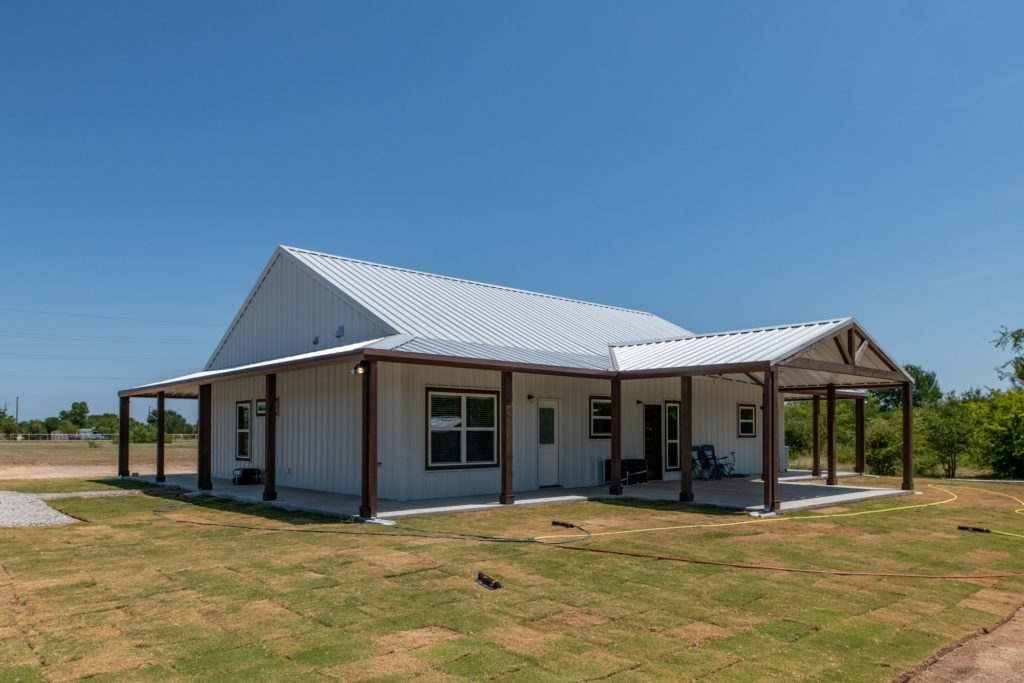
Barndominiums. Barndominiums (homes with a barn-style shape, often with a big shop or garage under the same roof) are popular in rural parts of many states, including Alabama. Most are now stick-framed with wood like a regular house, though some still use steel or post-frame construction.
How Much Does It Cost to Build a Home in Alabama?
New Home Magazine estimates that building a home in Alabama costs about $135 to $205 per square foot for the house itself. For a 2,000-square-foot home, that works out to roughly $270,000 to $410,000.
Where you land in that range depends on the size and complexity of the design, your finish choices, and where you build. A few Alabama-specific factors push costs up or down:
- Shallow foundations: Alabama’s frost depth is shallow, so slab and crawlspace foundations are common and usually less expensive than the deep footings or basements needed up north.
- Coastal wind rules: Homes in Mobile and Baldwin counties are built to stronger wind standards, with tie-downs, impact-rated windows, or shutters in some areas. That adds cost near the coast.
- Labor market: Labor is generally more affordable than the national average, but busy markets like Huntsville and Baldwin County can have longer waits for crews.
- Distance: Very rural sites may cost more because crews and deliveries have to travel farther.
Keep in mind these numbers cover the house only. Land, site work (clearing, grading, driveways), a well and septic system if there’s no city water or sewer, utility hookups, and permits are all extra. To compare Alabama with other states, see what it costs to build a new home in all 50 states.
Custom Home Builders in Alabama
Here are a few established builders that build custom homes in different parts of the state, including on land you own:
- S.S. Steele Homes (Mobile area): Builds custom homes on the buyer’s own lot across southwest Alabama, from its model plans or fully customized designs.
- Heritage Homes (Mobile area): Builds affordable new homes on customers’ own lots in south Alabama, south Mississippi, and northwest Florida.
- Owens Custom Homes (Huntsville): Specializes in custom homes built on clients’ land in the Huntsville area, and also serves Auburn.
- Mark Harris Homes (Huntsville): Builds energy-efficient custom homes in Huntsville and Madison County, on scattered lots and in communities.
- Lisenby Construction (Montgomery): Handles custom new home construction and remodeling in Montgomery and the River Region.
- America’s Home Place (several Alabama locations): An on-your-lot builder with Alabama locations including Huntsville, Opelika, and Dothan.
Before you sign with any builder, check that they hold a license from the Alabama Home Builders Licensure Board, which is required for most residential jobs over $10,000. Ask for proof of liability and workers’ comp insurance, call recent customers, and visit a finished home to see the quality for yourself.
Construction Loans in Alabama
Most people pay for a custom home with a construction loan. Instead of getting all the money at once, the lender pays your builder in stages (called “draws”) as the work is finished, and you usually pay only interest during the build. When the house is done, the loan either becomes a regular mortgage or you refinance into one. A “one-time close” loan does both steps with one set of closing costs. Learn more about how construction loans work.
Government-backed loans can also help. FHA construction loans allow a lower down payment, VA loans can work for eligible veterans and service members, and USDA loans are designed for rural areas, which covers much of Alabama outside the big metros.
Lenders that offer construction or rural home loans in Alabama include:
- Alabama Farm Credit: Offers rural home and construction loans, along with land loans.
- Alabama Ag Credit: Offers home loans, construction loans, and homesite loans for rural properties.
- Legacy Community Federal Credit Union: A Birmingham-area credit union that offers construction loans with staged draws for building a home in Alabama.
Property Taxes in Alabama
Alabama has some of the lowest property taxes in the country. The Tax Foundation ranks it second lowest, with an average effective rate of about 0.43% on owner-occupied homes. Rates vary by county and city, since local governments add their own millage (tax rates).
If the home is your main residence, apply for a homestead exemption at your county office. It lowers the assessed value that taxes are figured on, and seniors 65 and older, people with disabilities, and people who are blind may qualify for larger exemptions. You must own and live in the home on the first day of the tax year to qualify.
Home Insurance in Alabama
Alabama homeowners face a mix of weather risks, so it pays to shop carefully:
- Hurricanes: Mobile and Baldwin counties have the highest wind risk, and some policies there carry a separate, higher wind or hurricane deductible.
- Tornadoes: Tornadoes can strike anywhere in the state, especially in spring and late fall. Many families add a storm shelter or safe room.
- Flooding: Standard home insurance doesn’t cover flood damage. If you build near the coast, a river, or in a low area, look into flood insurance even if your lender doesn’t require it.
One tip: ask your builder about a FORTIFIED roof (a stronger roof built to a standard from the Insurance Institute for Business & Home Safety). Alabama insurers offer discounts for fortified homes, so ask your agent before you finalize the plans. Read more about home insurance for new homes.
Buying Land and Getting Permits in Alabama
Zoning: Cities and some counties have zoning, but large rural parts of Alabama have little or no zoning, which makes it easier to build what you want on country land. Subdivisions may still have deed restrictions or covenants, so read them before you buy.
Septic and perc tests: If there’s no sewer, you’ll need a septic system. The county health department reviews the soil and approves a septic permit before you build, so make your land purchase contingent on a passing soil test.
Frost depth: Frost depth is shallow, generally under a foot, so footings don’t need to go very deep.
Building codes: Permits and inspections are handled locally. Cities and counties that enforce codes run their own building departments, but many rural areas don’t issue building permits or inspect new homes. Even without inspections, ask your builder to follow current code. Lenders and insurers often expect it.
For more tips, read how to buy land to build a house.
House Plans for Your Alabama Home
Whether you want a classic brick ranch, a Southern farmhouse with a deep porch, or a raised coastal home, you can browse plans for every style before you talk to a builder. For barndominium and farmhouse-style plans, visit BarndominiumPlans.com. If a barndo is on your list, Barndominium Life is a good place for inspiration.
Final Thoughts
Alabama offers affordable land, low property taxes, and plenty of builders who will build on your lot. Start with your budget and a site, line up a construction loan early, and choose a builder you’ve checked out in person.