With resale prices high in much of the country, more Canadians are looking at building a home on their own land. Families leaving big-city prices behind, people building at the cottage or on rural acreage, and newcomers settling in growing towns all take on new builds. This guide covers rough costs by province, builders, financing, taxes, insurance and the permit steps to plan for.
Why Build a New Home in Canada
Canada has more land than buyers in many regions. Outside the big metro areas of Vancouver, Toronto, Ottawa, Montreal, Calgary and Edmonton, rural acreage and small-town lots are still within reach, from the Prairies to cottage country in Ontario to the Maritimes.
The climate shapes every new home here. Most of the country has long, cold winters, deep frost, snow loads and short outdoor building seasons, so foundations, insulation and roofs all need to be built for the cold. Coastal British Columbia is milder but very wet, which makes moisture and rot control the bigger concern.
Growth is strongest around the major cities and their commuter towns: the Fraser Valley and Okanagan in BC, the Calgary and Edmonton regions in Alberta, Saskatoon and Regina, the Greater Toronto and Hamilton area and its outer ring, Ottawa, and Halifax and Moncton in Atlantic Canada.
Types of New Homes in Canada
There are several ways to get a new home. For a full comparison, see our guide to types of new homes.
Custom Homes on Your Own Lot
This is the most flexible path. You buy the land (or already own it), choose or design a plan, and hire a builder or general contractor. It’s common for rural acreage, cottage lots and infill lots in town, and it lets you design around sun, views and winter winds.
Builder and Tract Communities
Production builders put up homes in planned subdivisions around most growing cities, especially in Alberta, the Ottawa and Toronto suburbs and the Fraser Valley. You choose from set plans and options. It’s often faster and more predictable, and these homes usually come with a provincial new home warranty, but you give up most choices about the lot and design.
Manufactured, Modular and Package Homes
Factory-built homes are popular in Canada because much of the work happens indoors, away from winter weather. Modular homes are built in sections to the same codes as site-built homes and set on a permanent foundation, while mobile or manufactured homes are built to the CSA Z240 standard. Package homes, where a supplier ships pre-cut materials and plans to your site, are another option, especially for cottages and log or timber homes.
Barndominiums
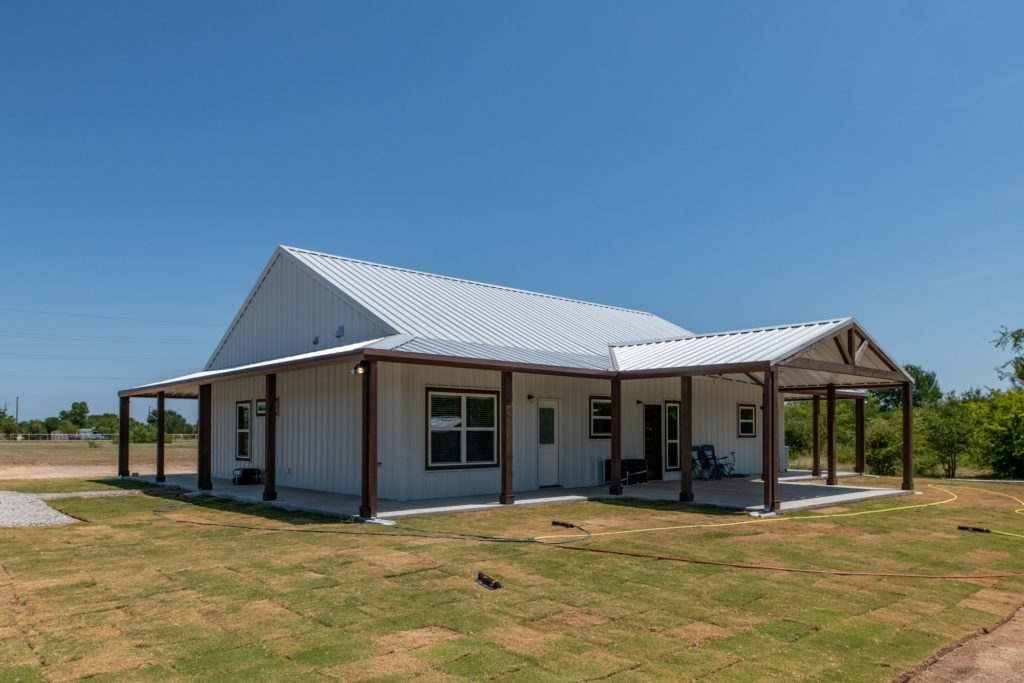
Barndominiums (barn-style homes, often with a big shop or garage under the same roof) are popular in rural parts of many regions, including the Prairies and rural Ontario. Most are now stick-framed like a standard house with metal siding and roofing, which makes them easier to insulate for Canadian winters, insure and finance.
How Much Does It Cost to Build a Home in Canada?
Building costs vary much more across Canada than across most US states, so there’s no single number. Here are New Home Magazine’s rough estimates for a typical custom home, for the house only, in Canadian dollars:
- British Columbia: about $350–$600+ per square foot, with Metro Vancouver and the islands at the top of the range.
- Ontario: about $300–$550 per square foot, highest in the Greater Toronto Area and lower in smaller cities and rural areas.
- Alberta: about $250–$400 per square foot.
- Saskatchewan and Manitoba: about $230–$350 per square foot.
- Quebec: about $250–$400 per square foot.
- Atlantic Canada: about $220–$350 per square foot.
For a 2,000-square-foot home, that works out to roughly $440,000 to more than $1.2 million depending on the province, the plan and the finishes. These are estimates only, so get quotes from local builders before you budget.
What drives costs:
- Frost depth and foundations: Footings often need to go 4 feet deep or more, and full basements are common.
- Snow loads and energy codes: Roofs must handle snow, and provincial energy rules call for heavy insulation and efficient windows and heating.
- Labor market: Skilled trades are in short supply in many regions, especially around big cities.
- Remote shipping: Building in the North, on islands or far from a major centre adds delivery and travel costs.
- Sales tax: GST or HST applies to new construction, though new housing rebates may reduce it for some buyers.
Land, site work, a well and septic system, utility hookups, development charges and permits are all extra. For US comparisons, see what it costs to build a new home in all 50 states.
Home Builders in Canada
Most custom homes in Canada are built by local general contractors, so the best builder for you will usually be one based near your land. These established Canadian companies supply or build homes that go on a buyer’s own lot:
- Royal Homes (Ontario): Builds factory-built bungalows, cottages and two-storey homes, with design centres across Ontario.
- Kent Homes (Atlantic Canada): Builds modular homes in a climate-controlled plant, with design centres in New Brunswick and PEI.
- Moduline (Western Canada): Builds modular single-family homes and mini homes at plants in Alberta and BC, sold through retailers.
- Linwood Homes (across Canada): Supplies custom-designed home packages and can handle construction stages or help you build yourself.
- Pan-Abode (Surrey, BC): Makes western red cedar log home packages and kits for homes, cabins and garages.
Builder rules vary by province. British Columbia requires residential builders to be licensed through BC Housing, and Ontario requires new home builders to be licensed and enrolled with the Home Construction Regulatory Authority and Tarion warranty program. Alberta, BC and several other provinces also require new home warranty coverage. In every province, check the builder’s licence and warranty enrollment where required, confirm liability insurance and WCB (workers’ compensation) coverage, call past clients, and visit a home they’ve finished.
Construction Mortgages in Canada
Most people finance a new build with a construction mortgage, also called a progress-draw or draw mortgage. Instead of paying the full amount up front, the lender releases money in stages (called draws) as the house reaches set milestones, often after an inspection. You pay interest only on the money released so far, and the loan becomes a regular mortgage once the home is finished. Learn more about how construction loans work.
If your down payment is less than 20%, you’ll need mortgage loan insurance from CMHC (Canada Mortgage and Housing Corporation) or a private insurer. CMHC’s minimum down payment is 5% on the first $500,000 and 10% on the portion above that, and insured mortgages aren’t available on homes priced at $1.5 million or more. Draw mortgages with low down payments can be harder to get, so talk to lenders early. Lenders offering construction mortgages include:
- Coast Capital: Offers construction mortgages with advances at each stage of the build and interest-only payments for up to 18 months.
- Conexus Credit Union: A Saskatchewan credit union with both construction mortgages and self-builder mortgages.
The big banks and many local credit unions also offer draw mortgages, so compare a few near where you plan to build.
Property Taxes in Canada
Property taxes in Canada are set by your municipality, and how much you pay varies a lot by province and by town. Each province has its own system for assessing your home’s value (for example, MPAC in Ontario and BC Assessment in British Columbia), and the municipality and school boards then set the rates. Rural municipalities often have lower rates but fewer services.
Several provinces offer relief for owner-occupied homes, such as BC’s Home Owner Grant and various senior and low-income programs. When you buy land, you may also pay a provincial land transfer tax (and a municipal one in Toronto), so factor that into your budget.
Home Insurance in Canada
The biggest risks for new homes in Canada are winter weather and water. Frozen pipes, ice dams, heavy snow loads and spring thaw can all cause damage. Flooding, both overland flooding from rivers and sewer backup, is one of the costliest risks in many regions. Wildfire is a growing concern in BC, Alberta and parts of the Prairies and Quebec, and coastal BC has earthquake risk.
Practical tips:
- Ask whether your policy includes overland flood and sewer backup coverage. These are often add-ons, not standard.
- Install a backwater valve and sump pump, which some insurers and municipalities reward with discounts or rebates.
- Insulate well and ventilate the attic to prevent ice dams, and protect pipes in unheated spaces.
- In wildfire areas, use fire-resistant roofing and siding and follow FireSmart guidelines around the home.
- In coastal BC, ask about earthquake coverage.
- Get a builder’s risk (course of construction) policy while the house is being built.
For more, see our guide to home insurance for new homes.
Buying Land and Getting Permits in Canada
Zoning in Canada is set by municipalities, and rural municipalities and counties usually have zoning bylaws too. Large unorganized areas in some provinces have few land-use rules. Check the zoning, minimum lot size and setbacks with the local planning office before you buy, along with any conservation authority rules for land near water in Ontario.
If the land isn’t on municipal sewer, you’ll need a septic system. Provinces regulate septic systems, usually through a health authority or the municipality, and require a soil assessment and a design by a qualified installer. Make your purchase conditional on a passing soil test and on finding good water for a well.
The National Building Code of Canada is the model code for the country. Most provinces adopt it directly or with changes, while Ontario, Quebec, British Columbia and Alberta publish their own codes based on it. Municipalities issue building permits and do inspections. Frost depth varies widely, from a few feet in southern regions to much deeper in the North and on the Prairies. For more on choosing land, read how to buy land to build a house.
House Plans for Your Canadian Home
Whether you want a bungalow with a full basement, a lakeside cottage or a modern farmhouse on acreage, you can browse plans for every style before you meet with a builder. Keep in mind that plans may need to be adapted to your provincial code and snow loads. For barndominium and farmhouse-style designs, check out BarndominiumPlans.com.
Final Thoughts
Building a home in Canada means planning for winter, provincial rules and a wide range of costs from one region to the next. Start with your land, zoning and septic, get real quotes from local builders, and talk to lenders about a draw mortgage before you commit.