Utah is one of the fastest-growing states in the country, and a lot of that growth means new homes. Young families are building along the Wasatch Front, retirees are heading for St. George, and many buyers are looking for land in places like Cache Valley, Heber Valley, or Sanpete County to build a custom home with room and a view.
Why Build a New Home in Utah
Most Utahns live along the Wasatch Front, the strip of cities from Ogden through Salt Lake City to Provo. Land there is in short supply and pricey. As you move outward, to Tooele, Cache, Box Elder, Sanpete, Juab, and Iron counties, land gets cheaper and lots get bigger. Southern Utah around St. George and Cedar City is another major growth area.
The climate is dry, with four seasons. Northern Utah has cold, snowy winters and hot summers, and the mountains get heavy snow. St. George and the southwest corner have a desert climate with mild winters and very hot summers.
Growth is strongest in Utah County (Lehi, Saratoga Springs, Eagle Mountain, Spanish Fork), southwestern Salt Lake County (Herriman, South Jordan), Davis and Weber counties, the Heber Valley and Park City area, and Washington County around St. George.
Types of New Homes in Utah
Here are the main types of new homes in Utah.
Custom homes on your own lot. Utah has a strong custom home industry, from luxury mountain homes around Park City and Heber to family homes on acre lots in Utah County. Building on your own lot lets you design for views, slope, and a big garage or shop.
Builder and tract communities. Production builders are very active along the Wasatch Front and in St. George, especially in fast-growing cities like Lehi, Saratoga Springs, Eagle Mountain, Herriman, and Washington. You pick a plan, and the lot is included.
Manufactured and modular homes. Factory-built homes are an option in rural Utah and can save time. Modular homes meet the same code as site-built homes, and manufactured homes follow a federal code. Some cities limit where they can be placed.
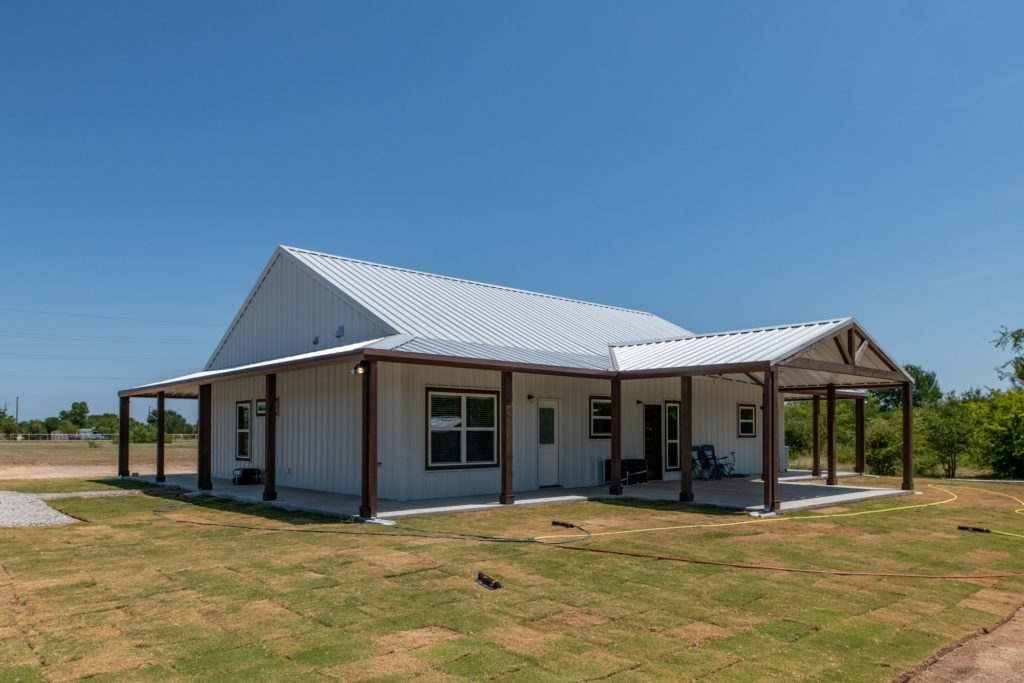
Barndominiums. Barndos (barn-style homes, often with a big shop or garage) are popular in rural parts of many states, including Utah’s farm and ranch areas. Most are now stick-framed (built with wood framing like a regular house), though post-frame (pole barn style) builds are also common here.
How Much Does It Cost to Build a Home in Utah?
New Home Magazine estimates it costs about $175–$265 per square foot to build a house in Utah. For a 2,000-square-foot home, that’s roughly $350,000–$530,000 for the house alone.
What drives costs in Utah:
- Labor demand. With so much building going on, skilled trades along the Wasatch Front stay busy, which keeps labor costs up.
- Seismic design. The Wasatch Fault runs along the most populated part of the state, so homes must be built to resist earthquakes, with extra bracing and anchoring.
- Snow loads. Homes in the mountains and northern valleys need roofs built to handle heavy snow.
- Frost depth. Footings in northern Utah and the mountains must go deeper than in the St. George area.
- Sloped lots in the foothills often need more excavation and retaining walls.
Land, site work, well and septic, utility hookups, and permits are extra. Impact fees (one-time fees cities charge for new roads, water, and parks) can also add up in fast-growing cities. See what it costs to build a new home in all 50 states for comparisons.
Custom Home Builders in Utah
These Utah builders build custom homes:
- Anthem Custom Homes (American Fork): A luxury custom builder serving Utah, Salt Lake, Davis, Wasatch, and Summit counties that can help you find and evaluate a lot.
- Ironwood Custom Builders (Cottonwood Heights): Builds custom homes across Salt Lake County and nearby areas.
- Cameo Homes (Kamas): Builds custom design-build homes in the Park City area and Summit and Wasatch counties.
Utah requires residential contractors to be licensed through the Division of Professional Licensing (DOPL), so look up any builder’s license before you sign. Ask for proof of liability insurance, call past clients, and tour a finished home. If you plan to build on land you already own, confirm that the builder takes on client-owned lots in your area.
Construction Loans in Utah
A construction loan pays your builder in stages (called draws) as the home is built. You usually pay only interest during construction, and the loan then converts to a regular mortgage or is paid off with one. Learn more about how construction loans work.
FHA and VA construction-to-permanent loans are available through approved lenders. USDA loans can work in rural parts of Utah, including many small towns outside the Wasatch Front and St. George, for buyers who meet income limits.
Lenders to look into:
- Western AgCredit: A Farm Credit lender serving Utah that offers Country Home Loans through its partner AgWest Farm Credit.
- State Bank of Southern Utah: A southern Utah community bank that offers home loans, including FHA and VA; ask about construction options.
- Cache Valley Bank: A Utah community bank that offers mortgage lending; ask about construction financing.
Property Taxes in Utah
Utah’s property taxes are below the national average. Your bill comes from your county, city, school district, and special districts, and rates vary from place to place.
Utah’s biggest break for homeowners is the primary residential exemption, which taxes only 55% of a primary home’s market value. Make sure your county knows the home is your primary residence. Seniors, veterans, and lower-income homeowners may qualify for additional relief.
Home Insurance in Utah
Utah’s main home insurance risks are:
- Earthquakes, especially along the Wasatch Front. Standard home insurance does not cover earthquake damage, so you’ll need a separate policy or add-on.
- Wildfire, especially in foothill and mountain areas. Some insurers charge more or limit coverage in high-risk zones.
- Heavy snow and ice in the north and the mountains.
- Flash floods, especially in southern Utah’s washes and canyons. Standard policies don’t cover flooding.
- Wind in canyon-mouth areas along the Wasatch Front.
Get quotes before you buy land, and ask how roof type and defensible space affect your price. Read more about home insurance for new homes.
Buying Land and Getting Permits in Utah
Utah has a statewide building code, the State Construction Code, which uses the International Residential Code (a model code used across the U.S.) with state changes. Cities and counties enforce it and issue permits.
Zoning is set by each city and county. Many rural counties have large-lot agricultural zones with fewer rules, but you’ll still need a building permit. Check lot size, setbacks, and whether you can keep animals or build a shop.
Water is a big deal in Utah. In rural areas, make sure the land comes with water rights or a share in a water company, or that a well is allowed. Water rights are managed by the Utah Division of Water Rights.
If there’s no sewer, you’ll need a septic system. Your local health department handles septic permits and requires soil and perc tests (tests of how well the ground absorbs water). Also check for geologic hazards like fault lines, landslide zones, and collapsible soils, which some counties map. Our guide on how to buy land to build a house covers the rest.
House Plans for Your Utah Home
You can browse house plans in every style, from modern mountain homes to farmhouses and ranches with RV garages. For barndominium and farmhouse-style plans with plenty of shop space, visit BarndominiumPlans.com. For real-world barndominium ideas, Barndominium Life is a great source of inspiration.
Final Thoughts
Utah offers strong growth, low property taxes, and beautiful settings, but land is costly near the cities. Check water rights and geologic hazards before you buy, and use a DOPL-licensed builder who knows your area.