Oregon attracts people who want mountains, forests, the coast and a slower pace, all within reach of good-sized cities. Many build custom homes on rural land in the Willamette Valley, Central Oregon or Southern Oregon, where they can get acreage and a view.
Why Build a New Home in Oregon
Oregon has a wide range of places to build. The Willamette Valley, home to Portland, Salem, Corvallis and Eugene, has mild, wet winters and dry, warm summers. Central Oregon, around Bend, Redmond and Sisters, is high desert with sunny skies, cold winters and snow. Southern Oregon, around Medford and Grants Pass, is warmer and drier, while the coast is cool and rainy year-round.
Buildable land can be harder to find than you’d expect, because Oregon has strict statewide land use rules that steer most new homes inside city growth boundaries and protect farm and forest land. Rural parcels that already allow a home can be valuable, so it pays to check the zoning before you fall in love with a property.
Central Oregon has been one of the fastest-growing parts of the state for years, along with the Portland suburbs, Salem and the Medford area.
Types of New Homes in Oregon
Oregon buyers have all the main types of new homes to choose from.
Custom homes on your own lot. If you own land, or can find a parcel zoned for a home, a custom home lets you design for your views, the weather and how you live. Several Oregon builders specialize in building on your land.
Builder communities. Planned neighborhoods are common in the Portland suburbs, Salem, Bend, Redmond and Medford. They’re simpler and often less expensive, but you choose from a set of plans.
Manufactured and modular homes. Factory-built homes are a good fit in rural Oregon where labor is harder to find. Check local zoning, since some areas have rules about where manufactured homes can go.
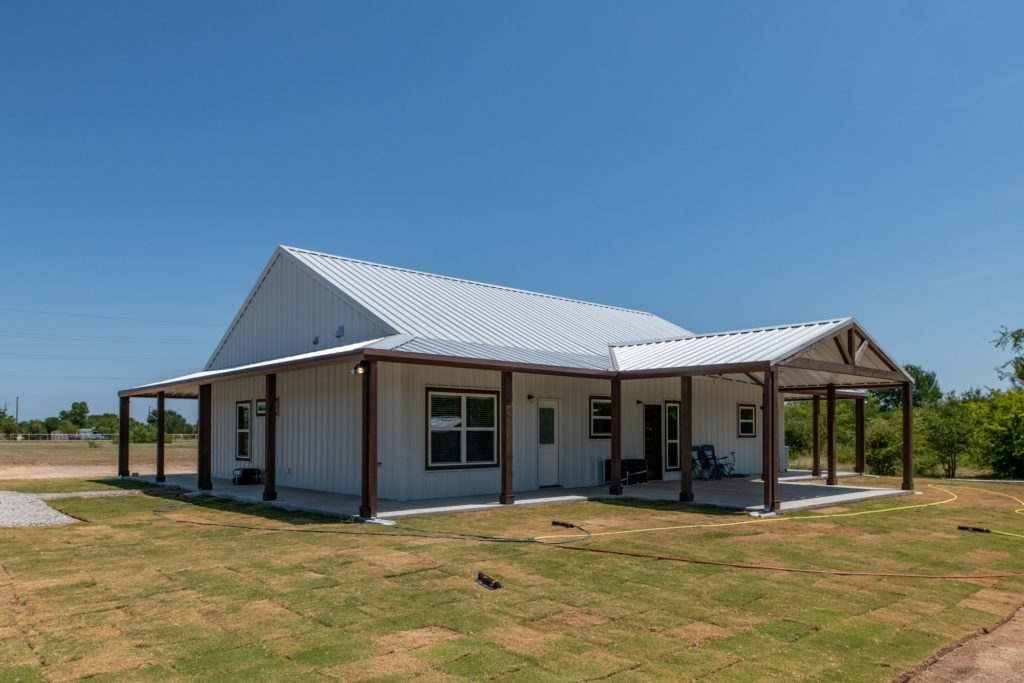
Barndominiums. Barndominiums, homes with a barn-style shell and open living space, are popular in rural parts of many states, and they’re common in Central and Eastern Oregon. Most are now stick-framed (built with wood framing like a regular house) instead of all steel.
How Much Does It Cost to Build a Home in Oregon?
New Home Magazine estimates that building a home in Oregon costs about $165–$250 per square foot for the house itself. For a 2,000-square-foot home, that works out to roughly $330,000–$500,000.
Costs are higher around Portland and Bend, where labor is in demand and permit fees, including system development charges (one-time fees cities charge new homes to pay for roads, water and sewer), can be significant. Oregon sits in an active earthquake zone, so homes need seismic bracing and proper anchoring. Central Oregon and mountain areas need roofs built for snow loads, and wildfire-prone areas may require fire-resistant materials.
These figures cover the house only. Land, site work, a well and septic system, utility connections, system development charges and permits are extra. For more, see what it costs to build a new home in all 50 states.
Custom Home Builders in Oregon
Here are some Oregon builders that build custom homes:
- Adair Homes (statewide, plus Washington, Idaho and Arizona): Builds custom homes on your land, with a large library of floor plans you can customize.
- Green Hammer (Portland): A design-build firm that specializes in zero-energy, high-performance custom homes.
- Norman Building & Design (Bend and Central Oregon): Builds custom homes with an in-house design, architecture and construction team.
- Cloninger Custom Homes (Bend): A Central Oregon builder of custom homes certified under the Earth Advantage green building program.
- Blue Spruce Builders (Willamette Valley and Central Oregon): Builds custom homes and also handles commercial work.
Oregon requires contractors to be licensed with the Construction Contractors Board (CCB), and anyone can check a contractor’s license online. Make sure the license is active, ask for proof of insurance, call past clients, and visit a home the builder recently finished.
Construction Loans in Oregon
A construction loan pays your builder in stages (called draws) as the work is completed. During construction you usually pay interest only, and when the home is done the loan becomes a regular mortgage or is paid off with one. Learn more about how construction loans work.
FHA and VA loans can be used for new construction with lenders that offer them. USDA loans can work well in rural Oregon, which includes much of the state outside the Portland, Salem, Eugene, Bend and Medford areas, if your income qualifies.
Lenders to look at:
- AgWest Farm Credit: A Farm Credit lender with branches in Oregon and other western states, offering country home, land and construction loans.
- Oregon State Credit Union: Offers home construction loans and land loans for a lot or bare land.
- First Interstate Bank: Offers one-time-close construction loans, construction-only loans and renovation loans.
Property Taxes in Oregon
Oregon’s property taxes are about average nationally. The state limits how fast the taxable value of a home can grow each year, so taxes are based on a “maximum assessed value” that is often below market value. Rates are set by local districts and vary by county and city.
Oregon doesn’t have a general homestead exemption, but it does offer property tax relief for veterans with disabilities and a tax deferral program for some seniors and people with disabilities. A newly built home is added to the tax rolls at a value tied to its market value, so ask the county assessor how your home will be valued.
Home Insurance in Oregon
Wildfire is the biggest concern in much of Oregon, especially in Central and Southern Oregon and along the Cascades. Earthquakes are also a real risk statewide, and standard home policies don’t cover them, so you’ll need a separate earthquake policy. Winter storms, heavy snow in the mountains and high desert, and flooding along rivers and the coast are other common risks.
Practical tips: use fire-resistant roofing, siding and vents, keep a defensible space (a cleared zone around the house), add seismic bracing and strap your water heater, and ask about earthquake and flood coverage. See home insurance for new homes for more.
Buying Land and Getting Permits in Oregon
Oregon has some of the strictest land use rules in the country. Every city has an urban growth boundary (a line that separates land meant for development from farm and forest land), and building a house on land zoned for farming or forestry outside that line is limited and often requires special approval. Before you buy rural land, ask the county planning department whether a home is allowed and what approvals you’ll need.
Oregon has a statewide residential building code, enforced by cities and counties or by the state Building Codes Division in some areas. Rural lots usually need a private well and septic system. Septic permits are handled by the Department of Environmental Quality or the county, and you’ll need a site evaluation (a soil test to see whether the land can support a septic system) before a system can be approved.
Frost depth is shallow in the Willamette Valley but deeper in Central and Eastern Oregon, so confirm the footing depth locally. For more, read how to buy land to build a house.
House Plans for Your Oregon Home
Northwest contemporary, craftsman, farmhouse and mountain-modern styles all fit Oregon well, and covered porches and large windows help you enjoy the views and stay dry in the rain. You can browse plans for every style and budget. For barndominium and farmhouse-style plans, visit BarndominiumPlans.com, and for barndominium inspiration, check out Barndominium Life.
Final Thoughts
Oregon is a beautiful place to build, but its land use rules mean you need to confirm a home is allowed before you buy rural land. Plan for wildfire and earthquake risks, use a CCB-licensed builder, and line up financing early.