Arkansas draws a steady stream of people who want room to spread out without paying big-city prices. Young families moving to the fast-growing northwest corner, retirees heading to the lakes and mountains, and rural buyers who want a few acres all find that building a new home here is still within reach. This guide walks through costs, builders, loans, taxes, insurance, and the land and permit steps to plan for.
Why Build a New Home in Arkansas
Land is the big draw. Outside the main metro areas, Arkansas has plenty of affordable acreage, from Ozark hillsides in the north to flat Delta farmland in the east and timberland in the south. Buying a lot and building on it is often realistic here in a way it isn’t in more expensive states.
The climate is mild for most of the year. Summers are hot and humid, winters are short, and snow is light in most areas, which means a longer building season than in northern states. The trade-off is severe weather: spring storms, tornadoes and hail are a real part of life here.
Growth is concentrated in a few places. Northwest Arkansas (Bentonville, Rogers, Springdale and Fayetteville) has been one of the fastest-growing regions in the South. Central Arkansas around Little Rock, Conway, Benton and Bryant keeps expanding, and Jonesboro anchors growth in the northeast. Hot Springs, Greers Ferry Lake, Bull Shoals and the Mountain Home area are popular with retirees and second-home buyers.
Types of New Homes in Arkansas
There’s no single “right” way to build here. Here’s a quick look at the main options; for a deeper comparison, see our guide to types of new homes.
Custom Homes on Your Own Lot
This is the most flexible path and a natural fit for Arkansas, where land is still affordable. You buy the land (or already own it), choose a plan, and hire a builder to build it. You control the layout, finishes, and where the house sits on the property, whether that’s a lot in town or 20 acres in the country.
Builder and Tract Communities
Production builders put up homes in planned subdivisions, mostly around Northwest Arkansas, the Little Rock suburbs, Conway and Jonesboro. You pick from a set of floor plans and options. It’s usually faster and simpler, but you give up choice of lot and many design decisions.
Manufactured and Modular Homes
Manufactured homes (built to a federal code in a factory) and modular homes (built in sections in a factory to local building codes) are common across rural Arkansas. They can lower costs and speed up the timeline. Check local rules and lender requirements, especially for foundations, before you buy land for one.
Barndominiums
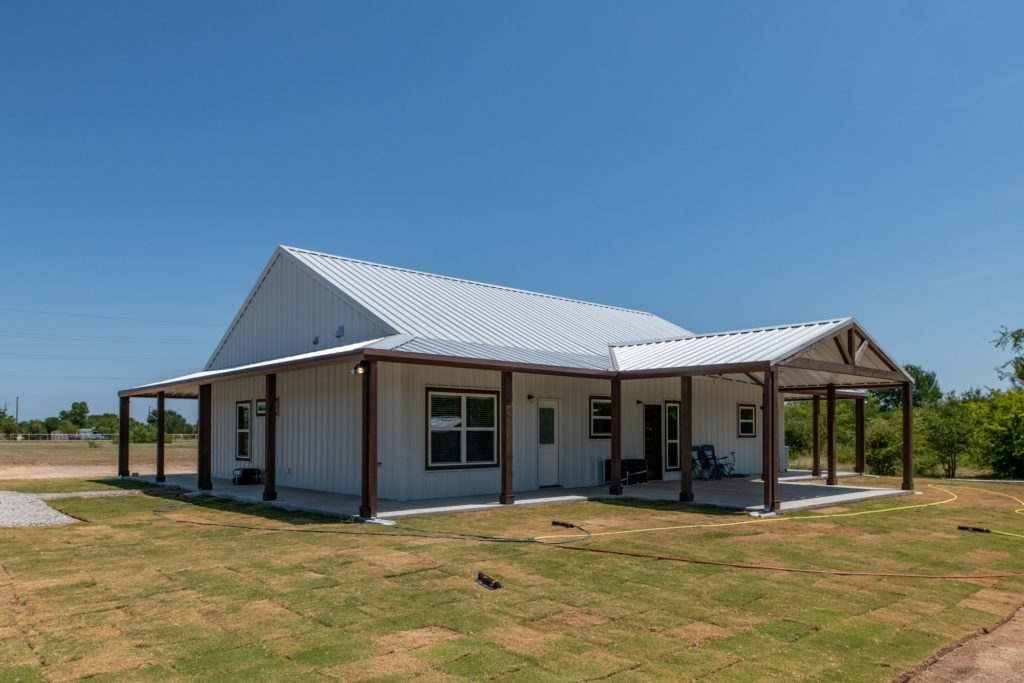
Barndominiums, homes with a barn-style look and often a big shop or garage under the same roof, are popular in rural parts of many states, and Arkansas is no exception. Early versions were steel buildings, but most are now stick-framed (built with wood framing like a regular house), which makes them easier to finance, insure and finish.
How Much Does It Cost to Build a Home in Arkansas?
New Home Magazine estimates that building a home in Arkansas costs about $140–$215 per square foot for the house itself. For a 2,000-square-foot home, that works out to roughly $280,000–$430,000.
Arkansas sits on the lower end nationally. Several things push your number up or down:
- Foundation and frost depth: Frost depth is fairly shallow in most of the state, so footings don’t need to go as deep as up north. Slab foundations are common and keep costs down.
- Storm-resistant features: Impact-rated roofing, storm shelters or safe rooms, and stronger roof connections add cost but are worth considering given tornado and hail risk.
- Labor market: Builders in fast-growing Northwest Arkansas are busy, and prices tend to run higher there than in the Delta or south Arkansas.
- Remote sites: Building far from town can mean longer trips for crews and higher delivery costs for materials.
- Finishes and size: Custom cabinets, stone, and high-end windows move you to the top of the range quickly.
Keep in mind that these figures are for the house only. Land, site work (clearing, grading, driveways), wells, septic systems, utility hookups and permits are extra, and on a rural lot they can add a significant amount. To see how Arkansas compares, check our breakdown of what it costs to build a new home in all 50 states.
Custom Home Builders in Arkansas
Here are some Arkansas builders that build custom homes, spread across different parts of the state. Always confirm directly that a builder will build on land you own.
- United Built Homes (Fayetteville / Northwest Arkansas): A regional builder focused on site-built homes on land you already own, with a design center in Fayetteville.
- Celtic Custom Homes (Fayetteville, Bentonville, Rogers and Springdale): Builds custom homes in both modern and traditional styles across Northwest Arkansas.
- Hines Homes (Maumelle / Central Arkansas): A design-and-build firm with in-house design and drafting that builds custom homes around Conway and Central Arkansas.
- ICC Builders (Vilonia / Central Arkansas): Builds custom homes and barndominiums and can turn your sketch into build plans or build from existing plans.
- BKC Home Builders (Hot Springs): Builds one-of-a-kind custom homes in Hot Springs and the surrounding area.
- Mark Morris Homes (Jonesboro): Builds custom homes in the Jonesboro area, including in its own subdivisions.
Before you sign, check that the builder holds an Arkansas residential builder license from the Arkansas Contractors Licensing Board, which is required for new home work over $2,000. Ask for proof of liability and workers’ comp insurance, call a few recent clients, and visit a finished home to see the quality for yourself.
Construction Loans in Arkansas
Most people pay for a new build with a construction loan. Instead of getting all the money up front, the lender pays the builder in stages (called “draws”) as the work is finished, and you usually pay only interest during construction. When the house is done, the loan either converts to a regular mortgage or is paid off with one. A “construction-to-permanent” loan does both with one closing, which saves on fees. Learn more in our guide to how construction loans work.
Government-backed options can lower your down payment. FHA and VA construction-to-permanent loans are available through some lenders, and the USDA’s rural housing programs are worth a look because much of Arkansas outside the main metro areas qualifies as rural.
A few Arkansas lenders that offer construction or home loans:
- AgHeritage Farm Credit Services: A Farm Credit lender headquartered in Little Rock that offers home loans, construction loans and rural acreage loans.
- Farm Credit of Western Arkansas: A Farm Credit association serving western Arkansas that offers home construction loans with a single closing for the construction loan and permanent mortgage.
- Arkansas Federal Credit Union: A credit union with branches in Arkansas that offers construction loans for building a home.
Farm Credit lenders are worth calling if you’re buying land in the country, since they’re used to rural property and acreage.
Property Taxes in Arkansas
Arkansas property taxes are among the lower ones in the country, which helps keep the long-term cost of owning a new home down. Taxes are set by your county and local taxing districts, so the amount varies by location.
Homeowners can claim a homestead tax credit on their main residence by applying with the county assessor. The state says the credit is up to $500 per year, rising to up to $600 starting with 2026 tax bills. Arkansas also limits how fast a homestead’s taxable value can rise during reappraisals (no more than 5% per year), and homeowners who are 65 or older or disabled can apply to freeze their assessed value. Note that these limits don’t apply to new construction, so your new home will be assessed at its full value once it’s built.
Home Insurance in Arkansas
Arkansas sits on the edge of Tornado Alley, and spring storms bring tornadoes, damaging winds and hail. Flooding is a risk near rivers and in the Delta, and northeast Arkansas is near the New Madrid seismic zone, which means earthquake risk there is higher than most people expect.
Some practical tips:
- Ask about hail and wind deductibles, which are often a percentage of your home’s value rather than a flat dollar amount.
- Consider impact-resistant roofing, which may earn a premium discount and holds up better in hail.
- Standard home policies don’t cover flooding or earthquakes. Check FEMA flood maps for your lot and price out separate flood or earthquake coverage if you’re in a risk area.
- Get a builder’s risk policy to cover the home while it’s under construction.
For more, see our guide to home insurance for new homes.
Buying Land and Getting Permits in Arkansas
Cities and some counties in Arkansas have zoning rules, but many rural areas have little or no zoning. That gives you more freedom, but it also means you should check deed restrictions, covenants and road access carefully, since there may be fewer rules protecting you from what a neighbor builds.
If the land doesn’t have city sewer, you’ll need a septic system. The Arkansas Department of Health oversees onsite wastewater systems, and you’ll need a soil evaluation before a system can be designed and permitted. Do this before you buy, because poor soils can make a lot much more expensive to build on. Many rural lots also need a private well.
Frost depth is shallow compared with northern states, but it varies from south to north, so your builder or local building office will set the footing depth. Permit and inspection requirements depend on where you build: cities usually require permits and inspections, while rural areas can have far fewer. For a step-by-step checklist, read our guide on how to buy land to build a house.
House Plans for Your Arkansas Home
Choosing a plan is one of the most fun parts of building. You can browse plans for every style, from small cottages to large family homes. If you love the open, relaxed look of a modern farmhouse or a barndominium, BarndominiumPlans.com has a big collection of barndominium and farmhouse-style plans, and Barndominium Life is a good place to find barndominium inspiration.
Final Thoughts
Arkansas offers affordable land, reasonable building costs and low property taxes, which makes a custom home on your own lot a realistic goal for many families. Plan for storms when you choose your insurance and building features, check the soil and access before you buy land, and take time to vet your builder.