Montana pulls in people who want space, mountains, and a slower pace of life. Some are locals building on family land, others are moving from out of state to Bozeman, Missoula, or the Flathead Valley, and many are buying acreage to build a custom home with a view.
Why Build a New Home in Montana
Montana is huge and lightly populated, so land is everywhere. The western half is mountainous and forested, with valleys around Missoula, Kalispell, Whitefish, Bozeman, and Helena. The eastern half is open prairie and ranch country, where land is far cheaper and lots are often measured in dozens or hundreds of acres.
Winters are long and cold, with heavy snow in the mountains and bitter wind on the plains. Summers are short, dry, and pleasant, but wildfire smoke and fire risk have grown in recent years. Building a home that handles cold, snow, and fire is a big part of planning here.
Growth is strongest in Gallatin County (Bozeman, Belgrade, Big Sky), Flathead County (Kalispell, Whitefish, Columbia Falls), and the Missoula area. Billings, Montana’s largest city, and Helena are also seeing steady new construction.
Montana also has no general state sales tax, which helps a little when you’re buying appliances and furnishings for a new home. Keep in mind that land prices in the most popular valleys have risen sharply, so many buyers now look at smaller towns like Livingston, Dillon, Lewistown, or Miles City for better value.
Types of New Homes in Montana
You’ll find several types of new homes across Montana.
Custom homes on your own lot. This is the classic Montana build: buy land, then hire a builder to design a home around the views, sun, and slope. Local builders are used to remote sites, steep driveways, and long winters.
Builder and tract communities. Planned neighborhoods are growing around Bozeman and Belgrade, Kalispell, Missoula, and Billings. You pick from set floor plans, and the lot comes with the home.
Manufactured and modular homes. Factory-built homes are common in rural Montana, where getting a full crew to a remote site can be slow and costly. Modular homes meet the same codes as site-built homes, and manufactured homes follow a federal code.
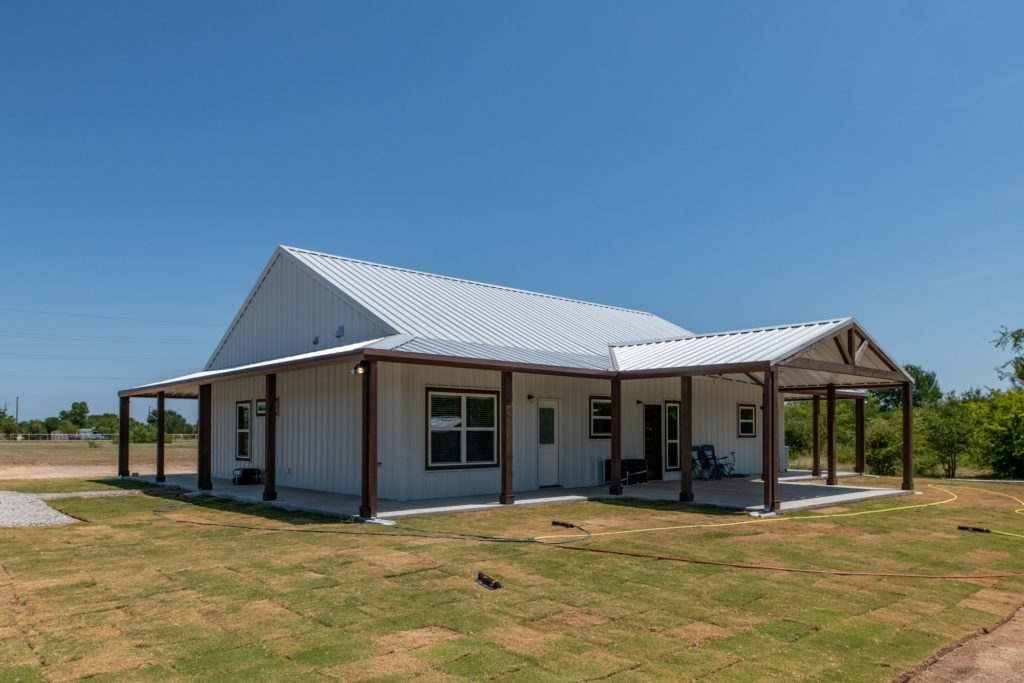
Barndominiums. Barndos (barn-style homes, often with a big shop or garage) are popular in rural parts of many states, and Montana’s ranch country is a natural fit. Most are now stick-framed (built with wood framing like a regular house), while post-frame (pole barn style) builds are also common here.
How Much Does It Cost to Build a Home in Montana?
New Home Magazine estimates it costs about $175–$270 per square foot to build a house in Montana. For a 2,000-square-foot home, that’s roughly $350,000–$540,000 for the house alone.
What drives costs in Montana:
- Location. Resort and high-demand areas like Big Sky, Whitefish, and Bozeman cost much more, and builders there are often booked well ahead. Eastern Montana is usually cheaper.
- Remote sites. Hauling materials and crews long distances, building access roads, and running power can add a lot.
- Frost depth. Montana’s ground freezes deep, so footings must go well below the surface, which adds concrete and excavation cost.
- Snow loads. Roofs in the mountains must be built to carry heavy snow.
- Short building season. Cold weather limits outdoor work, which can stretch timelines.
Land, site work, well and septic, utility hookups, and permits are extra. See what it costs to build a new home in all 50 states for comparisons.
Custom Home Builders in Montana
These Montana builders build custom homes, including on land you own:
- Copper Mountain Builders (Kalispell): Builds custom homes in the Flathead Valley and northwest Montana, mostly for clients who already have a lot.
- A S Hathaway Construction (Bozeman): Builds custom mountain-style homes in the Bozeman, Big Sky, and Helena areas.
- Ames & Associates Custom Builders (Missoula): Builds custom homes in the Missoula area of western Montana.
- Langlas & Associates (statewide): Builds high-end custom homes across Montana, including remote projects.
Montana requires construction contractors with employees to register with the state Department of Labor and Industry, so ask for a builder’s registration. Also get proof of liability insurance, call past clients, and visit a home they’ve finished, ideally after a winter.
Construction Loans in Montana
A construction loan pays your builder in stages (called draws) as each phase is done. You usually pay only interest during construction, and the loan then becomes a regular mortgage or is paid off with one. Learn more about how construction loans work.
FHA and VA construction-to-permanent loans are available through approved lenders. USDA loans are a good fit for much of rural Montana, which covers most of the state outside the larger cities, for buyers who meet income limits.
Lenders to look into:
- AgWest Farm Credit: A Farm Credit lender with Montana branches that offers Country Home Loans, including construction loans for rural homes.
- Stockman Bank: A Montana bank that offers home loans; ask about its construction options.
Property Taxes in Montana
Montana’s property taxes are around the middle of the pack nationally. Your bill depends on your county, school district, and any local levies. Montana has no general sales tax, so local governments lean more on property taxes than in many states.
Montana doesn’t have a traditional homestead exemption, but the state has recently changed how primary homes are taxed to favor owner-occupied homes, and there are relief programs for some lower-income homeowners and disabled veterans. Make sure your county knows the house is your primary residence, and check with the Montana Department of Revenue for current rules.
Home Insurance in Montana
Montana’s main home insurance risks are:
- Wildfire, especially in forested areas of western Montana. Some insurers charge more or limit coverage in high-risk areas, so shop early.
- Snow and ice, including roof damage from heavy snow and ice dams.
- Hail and wind, especially on the eastern plains.
- Frozen pipes in very cold weather.
- Flooding from spring snowmelt along rivers. Standard home insurance doesn’t cover floods, so ask about a separate policy if your land is near water.
Distance to a fire station and hydrant matters a lot for rural homes. Ask for quotes before you buy land. Read more about home insurance for new homes.
Buying Land and Getting Permits in Montana
Montana has a state building code, but enforcement varies. Cities and some counties enforce it locally, while in many rural areas there’s little or no building inspection for single-family homes. Even then, you’ll still need permits for electrical, plumbing, and septic work. Ask the county what applies to your site.
Zoning is limited in many rural Montana counties, which gives you freedom but also means less protection from what neighbors build. Splitting land into smaller parcels falls under Montana’s subdivision rules, which can take time.
Water and septic are key. Check well depths and water rights before you buy, and get a septic permit from the county health department. A site evaluation shows whether the soil can handle a septic system.
Frost depth is deep across Montana, so footings must be built well below grade. Also check winter road access, power line distance, and wildfire risk. Our guide on how to buy land to build a house covers the rest.
House Plans for Your Montana Home
You can browse house plans in every style, from mountain lodges and cabins to modern farmhouses. For barndominium and farmhouse-style plans with room for a big shop, visit BarndominiumPlans.com. For barndominium inspiration from real builds, check out Barndominium Life.
Final Thoughts
Montana rewards careful planning: deep frost, heavy snow, and wildfire risk all shape where and how you build. Pick land with good water and access, and work with a builder who has built in your area before.