Wisconsin is a great fit for people who want lakes, woods and small-town living within reach of solid job markets. Many families build custom homes on rural lots, lake property or land outside Madison, Milwaukee and the Fox Valley.
Why Build a New Home in Wisconsin
Wisconsin has plenty of buildable land, from farm country in the south to the Northwoods with its thousands of lakes. Land is generally more affordable than in neighboring Illinois or Minnesota’s Twin Cities area, especially outside the larger cities.
The climate is cold and snowy in winter and warm and humid in summer. Northern Wisconsin gets more snow and colder temperatures, while the south is milder. Lake Michigan and Lake Superior also affect the weather near the shore, bringing lake-effect snow and cooler summers.
The strongest growth areas are around Madison (Dane County), the Milwaukee suburbs in Waukesha, Washington and Ozaukee counties, the Fox Valley (Appleton, Oshkosh), Green Bay and the Eau Claire and La Crosse areas. Up north, lake country around Minocqua, Rhinelander and Door County draws people building year-round and vacation homes.
Types of New Homes in Wisconsin
You’ll find all the main types of new homes in Wisconsin.
Custom homes on your own lot. This is a strong option here, especially if you own rural acreage, lake property or a lot outside town. You choose the plan and the builder, and the home is designed for your land and Wisconsin winters.
Builder communities. New subdivisions are common around Madison, the Milwaukee suburbs, the Fox Valley and Green Bay. They’re quicker and simpler, with fewer design choices.
Manufactured and modular homes. Factory-built homes, including panelized homes (where wall sections are built in a factory and assembled on site), are popular in Wisconsin because they cut down on time spent building in cold weather.
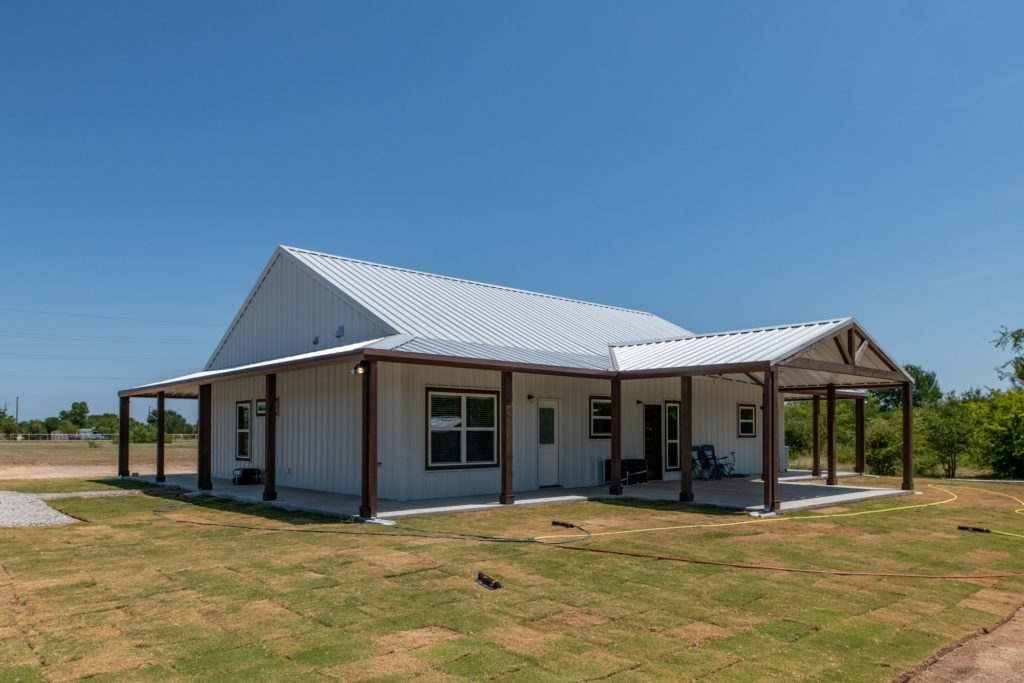
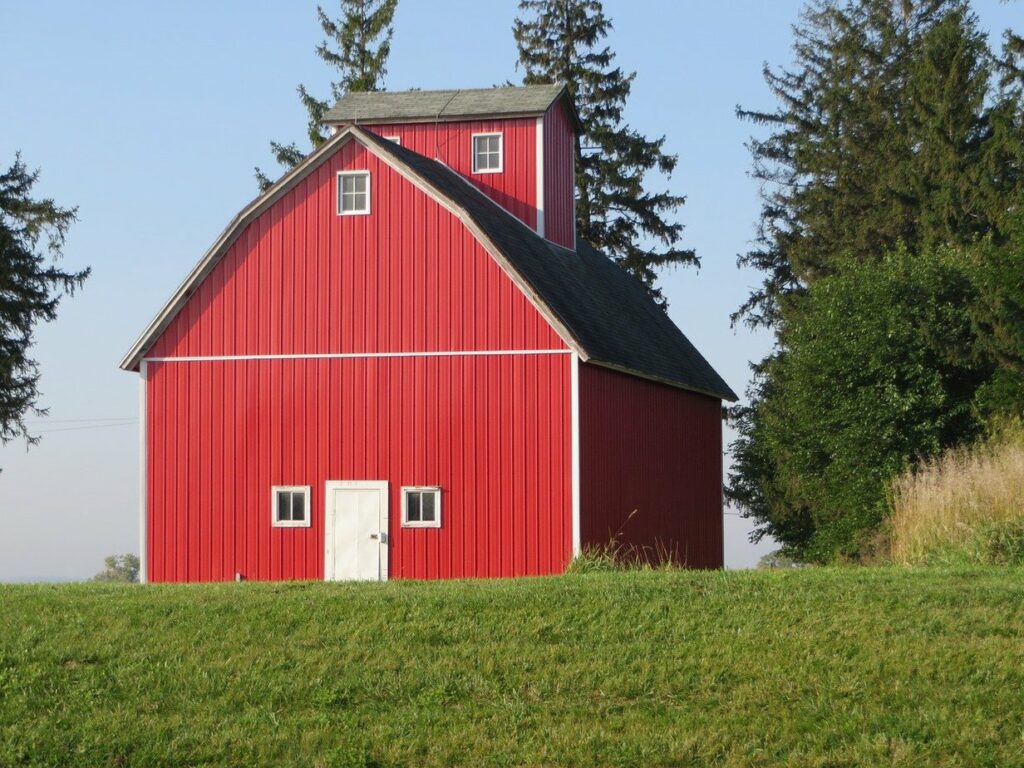
Barndominiums. Barndominiums, homes with a barn-style shell and open living space, are popular in rural parts of many states, and they fit well in Wisconsin farm country. Most are now stick-framed (built with wood framing like a regular house) rather than all steel, which makes them easier to insulate for long winters.
How Much Does It Cost to Build a Home in Wisconsin?
New Home Magazine estimates that building a home in Wisconsin costs about $195–$300 per square foot for the house itself. For a 2,000-square-foot home, that’s roughly $390,000–$600,000.
The biggest cost drivers are the cold climate and location. Foundations must go below the frost line, and full basements are common, which adds cost but also gives you more living space. Homes need good insulation and heating systems. Labor costs are higher around Madison and the Milwaukee suburbs, while remote Northwoods and lake sites can cost more due to access and travel.
These figures cover the house only. Land, site work, a well and septic system, utility connections and permits are extra. For a comparison, see what it costs to build a new home in all 50 states.
Custom Home Builders in Wisconsin
Here are some Wisconsin builders that build custom homes, including several that will build on your land:
- Tim O’Brien Homes (Madison and Milwaukee areas): Offers an “On Your Lot” program for people who already own land, along with homes in its own neighborhoods.
- Halen Homes (Milwaukee area): Builds custom homes on your own lot as well as in its own developments.
- Belman Homes (Waukesha County): A custom home builder serving Waukesha County and the Milwaukee area.
- Wausau Homes (statewide through local builders): Designs custom panelized homes that are built by a network of independent local builders across Wisconsin and nearby states.
Wisconsin requires anyone who takes out a building permit for a one- or two-family home to hold a state Dwelling Contractor credential, and you can look up credentials online through the Department of Safety and Professional Services. Also ask for proof of insurance, call past clients, and visit a home the builder finished.
Construction Loans in Wisconsin
A construction loan pays your builder in stages (called draws) as the work is done. You usually pay interest only during construction, and the loan then converts to a regular mortgage or is paid off with one. Read more about how construction loans work.
FHA and VA loans can be used for new construction with lenders that offer them. USDA loans are a strong option in rural Wisconsin, which includes much of the state outside the larger cities, if your income qualifies.
Lenders to look at:
- UW Credit Union: A Wisconsin credit union that offers construction loans to build a new home from the ground up.
- Compeer Financial: A Farm Credit lender serving Wisconsin, Minnesota and Illinois, with one-time-close construction loans for building in rural areas.
Property Taxes in Wisconsin
Wisconsin’s property taxes are higher than the national average. Rates are set locally by municipalities, counties, school districts and technical college districts, so they vary from place to place.
Wisconsin doesn’t have a traditional homestead exemption that lowers your home’s assessed value, but it does offer a lottery and gaming credit for primary homes (applied right on your tax bill) and an income-based homestead credit for lower-income homeowners. There’s also a property tax credit for some disabled veterans. Ask your local assessor how a new home will be valued.
Home Insurance in Wisconsin
The biggest risks in Wisconsin are winter-related: heavy snow loads, ice dams on the roof, frozen pipes and damage from winter storms. Summer brings severe thunderstorms, hail and occasional tornadoes, especially in the southern half of the state. Homes near rivers and lakes may face flooding, which needs a separate policy.
Practical tips: design your roof for local snow loads, insulate and seal well to prevent ice dams, protect pipes from freezing, choose impact-resistant roofing, and buy flood insurance if you’re near water. Read our guide to home insurance for new homes.
Buying Land and Getting Permits in Wisconsin
Wisconsin has a statewide building code for one- and two-family homes, called the Uniform Dwelling Code (UDC). It applies everywhere in the state, and local building inspectors or state-certified inspectors enforce it. That means you’ll need a building permit and inspections even in rural areas.
Zoning is handled by counties, towns, cities and villages. Most counties have zoning in rural areas, though some towns have opted out of county zoning. If you’re buying lake or river property, county shoreland zoning rules limit how close you can build to the water and how much land you can clear.
Rural lots need a private well and a private septic system, which Wisconsin calls a POWTS (private onsite wastewater treatment system). The county issues septic permits after a certified soil tester checks the soil. Footings must go below the frost line, which is deep in Wisconsin, so confirm the requirement locally. For more, see how to buy land to build a house.
House Plans for Your Wisconsin Home
Farmhouses, ranches with full basements, lake cottages and two-story family homes all work well in Wisconsin. A mudroom near the garage is a must for snowy winters. You can browse plans for every style and budget. For barndominium and farmhouse-style plans, visit BarndominiumPlans.com, and for barndominium inspiration, take a look at Barndominium Life.
Final Thoughts
Wisconsin offers good land values, beautiful lakes and a statewide building code that helps protect your investment. Check zoning, shoreland and septic rules before you buy, pick a credentialed builder, and design your home for long winters.