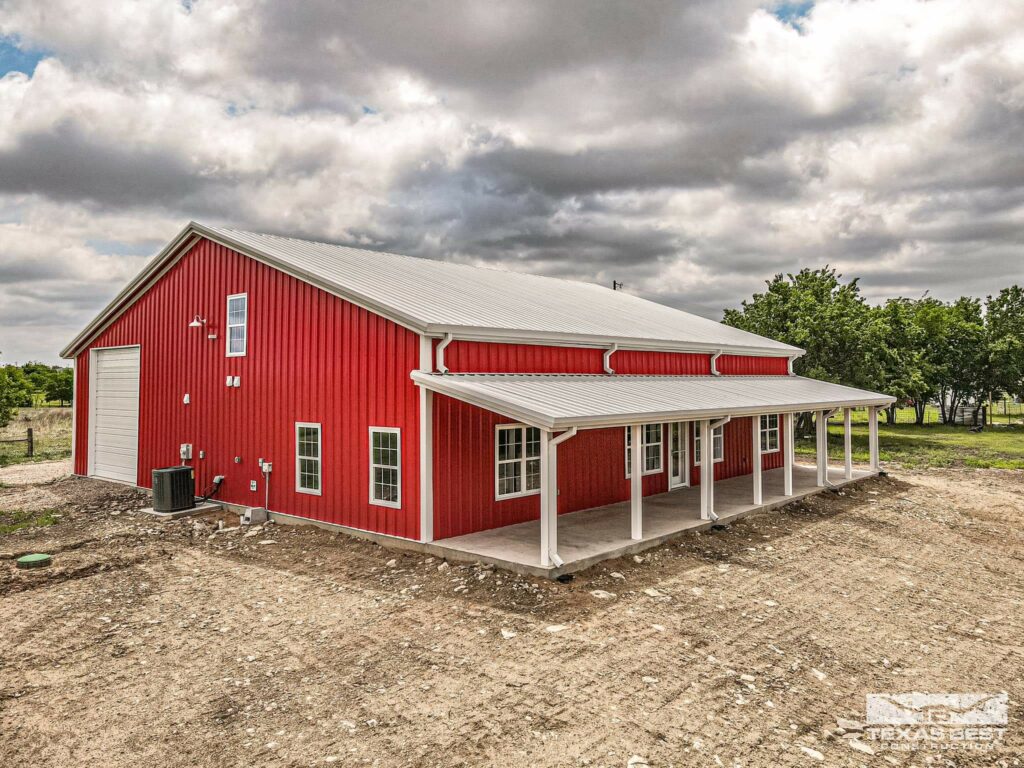
If you’re building a new home on your own land, you generally can’t use a regular mortgage — because there’s no house yet for the bank to lend against. Instead, you’ll use a construction loan. Here’s how they work, the main types, and how to qualify.
What Is a Construction Loan?
A construction loan pays for the building of your home in stages. Instead of handing over the full loan amount on day one, the lender releases money in installments — called draws — as the builder finishes each phase of work (foundation, framing, roof, and so on). Before each draw, the lender typically sends an inspector to confirm the work is done.
During construction you usually pay only interest on the money that’s been drawn so far, not the full loan. That keeps payments lower while you’re building, and often while you’re still paying rent or a mortgage on your current home.
Once the home is finished, the construction loan either converts into a regular mortgage or gets paid off with a new one.
The Two Main Types
One-time close (construction-to-permanent)
A one-time close loan — also called a construction-to-permanent or single-close loan — combines the construction loan and your long-term mortgage into one loan with one closing. When the house is done, it automatically converts to a standard mortgage.
Pros:
- One application, one approval, one set of closing costs.
- Your permanent mortgage rate is usually locked in before construction starts, so you’re protected if rates rise while you build. Some lenders offer a “float-down” if rates drop.
- You don’t have to re-qualify at the end — important if your income or job changes during the build.
Cons:
- Fewer lenders offer it.
- You may pay a slightly higher rate for the certainty of locking early.
Two-time close (construction-only, then a mortgage)
With a two-time close, you take out a short-term construction loan first, then get a separate mortgage when the home is finished to pay it off.
Pros:
- More lender options, and you can shop for the best mortgage rate at the end.
- Can make sense if you expect rates to drop during your build.
Cons:
- Two closings, two sets of fees.
- You have to qualify again at the end. If your credit, income, or the home’s appraisal changes, you could be stuck.
For most families, a one-time close is the simpler and safer choice.
Construction Loan Programs and Down Payments
Construction loans are available through several programs. Requirements vary by lender, but here’s the general picture:
- Conventional construction loans: Usually require strong credit (often 680 to 700 or higher) and a down payment typically between 10% and 20% or more, depending on the lender.
- FHA one-time close: Backed by the Federal Housing Administration. Down payments can be as low as 3.5% with a credit score of 580 or higher, though individual lenders often set higher minimums.
- VA one-time close: For eligible veterans and service members. Can allow zero down payment and no private mortgage insurance.
- USDA single-close: For homes in eligible rural areas, for buyers who meet income limits. Can also allow zero down.
Already own your land? In many cases the equity in your land can count toward your down payment. If you own a $60,000 lot free and clear, that may cover some or all of what you’d otherwise pay in cash.
What Lenders Will Want to See
Construction loans are riskier for banks than regular mortgages, so expect more paperwork:
- Your credit, income, and debts — the same things any mortgage lender checks.
- Your house plans — the full set of construction drawings.
- A detailed budget from your builder, often called a cost breakdown, listing what each part of the house will cost.
- A signed contract with a licensed, insured builder. Many lenders will review the builder’s experience, licensing, and references before approving them.
- An appraisal based on the plans — the appraiser estimates what the finished home will be worth.
- Proof of your land — a deed if you own it, or a purchase contract if the loan is also buying the land.
Can I Be My Own General Contractor?
Possibly, but it’s harder. Loans for “owner-builders” are offered by far fewer lenders and usually come with higher down payments, higher credit requirements, and proof that you have real construction experience. Most people building their first home are better off hiring a builder.
Tips for Getting a Construction Loan
- Talk to lenders early — before you finalize your plan and builder. Ask what they require so there are no surprises.
- Look for lenders that specialize in construction loans, including local banks and credit unions. They often understand local builders and land better than big online lenders.
- Build a cushion into your budget. Many lenders require a contingency (extra money set aside) for cost overruns. Even if yours doesn’t, plan for one.
- Ask how draws work — how many there are, how long inspections take, and who pays inspection fees. Slow draws mean unhappy builders.
- Compare total costs, not just the rate. Closing costs, inspection fees, and rate-lock fees vary a lot between lenders.
A construction loan takes more legwork than a regular mortgage, but it’s what makes building on your own land possible — and with a one-time close, it can be surprisingly straightforward.
This article is general information, not financial advice. Loan programs, requirements, and rates change often; check with lenders for current terms.