If you’re shopping for a brand-new home, you’ll quickly find that “new home” can mean very different things. A factory-built home delivered on a truck, a steel-framed barndominium, a house in a builder’s subdivision, and a one-of-a-kind home built on your own land are all “new” — but they differ wildly in price, quality, financing, and how much say you get in the design.
Here’s a plain-English guide to the main types of new homes being built in America today, and how to decide which one fits you.
1. Manufactured and Mobile Homes
Manufactured homes are built entirely in a factory and shipped to the site in one or more sections. Since June 15, 1976, they’ve been built to a single national building code run by the U.S. Department of Housing and Urban Development (often called the “HUD code”). Homes built before that date are technically “mobile homes,” though most people still use the terms interchangeably.
The big draw is price. According to the U.S. Census Bureau’s Manufactured Housing Survey, the average new manufactured home sold for roughly $131,500 in late 2025 — far below the cost of a site-built home. Single-section homes ran under $90,000 on average.
The trade-offs:
- Financing is harder. Many manufactured homes are financed with personal-property loans (called “chattel” loans) at higher interest rates than a normal mortgage, especially when the home isn’t permanently attached to land you own.
- Resale value can lag behind site-built homes in many markets.
- Zoning limits. Some towns and subdivisions don’t allow manufactured homes at all.
- Less customization. You choose from a manufacturer’s catalog rather than designing your own layout.
Modular homes are different. Modular homes are also built in a factory, but they’re built to the same local building codes as a site-built house and are set on a permanent foundation. Lenders and appraisers generally treat them like any other house.
2. Barndominiums
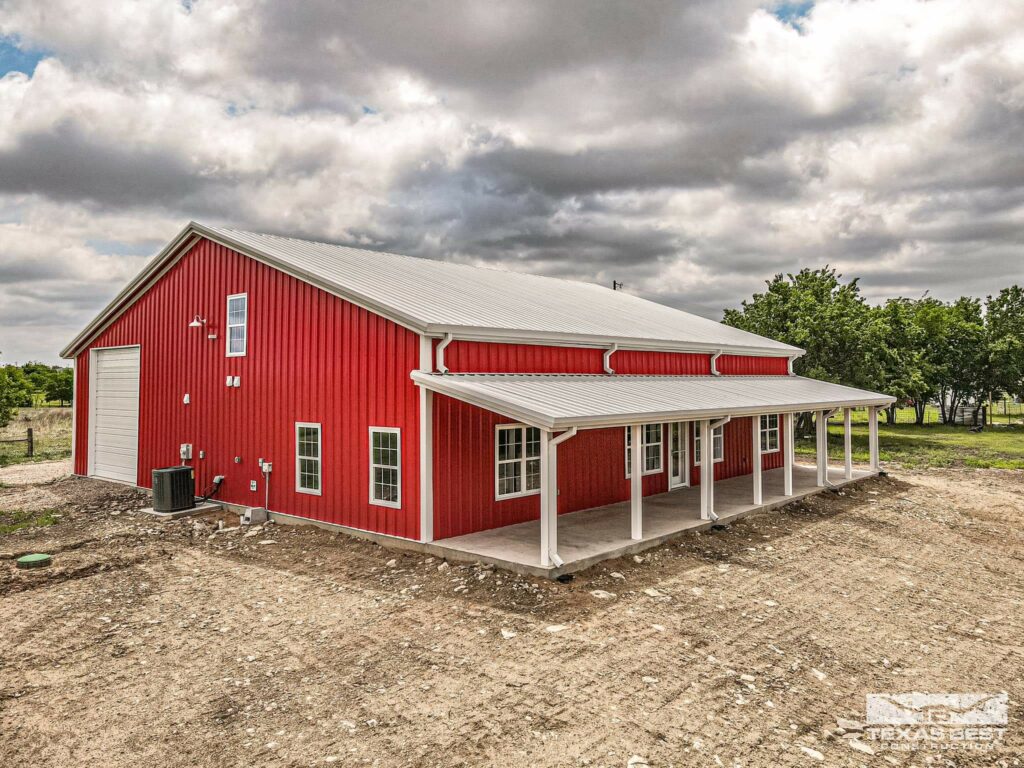
Barndominiums (“barndos”) started as metal barns with living space inside and have grown into one of the most popular home styles in rural and suburban America — known for open floor plans, tall ceilings, big shops and garages, and a farmhouse look. There are a few ways they’re built:
- Red iron (steel frame): Heavy structural steel columns and rafters, usually ordered as a kit. Very strong and allows wide open spans, but requires a crane, specialized erectors, and more engineering.
- Cold-formed steel (CFS): Lighter-gauge steel studs and trusses that frame more like a conventional house. Resists rot and termites and is popular in some regions, but fewer local crews are experienced with it.
- Post-frame (pole barn): Large wood posts set in the ground or on a slab with wide spacing between them. Often the most budget-friendly shell for big open spaces and shops.
- Stick-frame (conventional wood framing): Here’s the industry secret: most “barndominiums” being built today are actually framed just like a regular house — wood studs and trusses — with the barn-style look coming from the roofline, metal siding, porches, and open interior. Stick-framing is what most local builders, lenders, and inspectors know best, which makes it easier to get bids, financing, and permits.
In other words, “barndominium” today is mostly a style, not a construction method. That’s good news: you can get the look you want while building with whatever method your local builders do best.
3. Tract Homes (Production Homes in Builder Communities)
Tract homes — also called production homes — are built by large homebuilders in planned subdivisions. The builder buys a big piece of land, divides it into lots, and builds dozens or hundreds of homes from a short menu of floor plans.
This is by far the most common way new homes are built in the U.S. According to the National Association of Home Builders’ analysis of Census data, about 73% of new single-family homes started in 2024 were built for sale, mostly in subdivisions like these.
The upside: a predictable price, a fast and familiar process, model homes you can walk through, and builder financing incentives.
The downside: limited floor plans, lots that are often small, upgrades that add up quickly, homes that look a lot like your neighbors’, and HOA rules. You’re also buying the land the builder picked, not the land you picked.
4. Custom Homes Built on Your Own Lot
A custom home is built one at a time, on land you own, from a plan you choose. You either hire a builder as your general contractor or — if you have the experience — manage the build yourself.
This is what the Census Bureau calls “contractor-built” or “owner-built” homes. In 2024, about 17.5% of new single-family homes started — nearly 177,000 homes — were custom homes built this way, according to NAHB. In New England, the share is over 40%.
Why build on your own lot?
- You pick the land. Acreage, a view, a quiet road, room for a shop — instead of a tight lot in a subdivision.
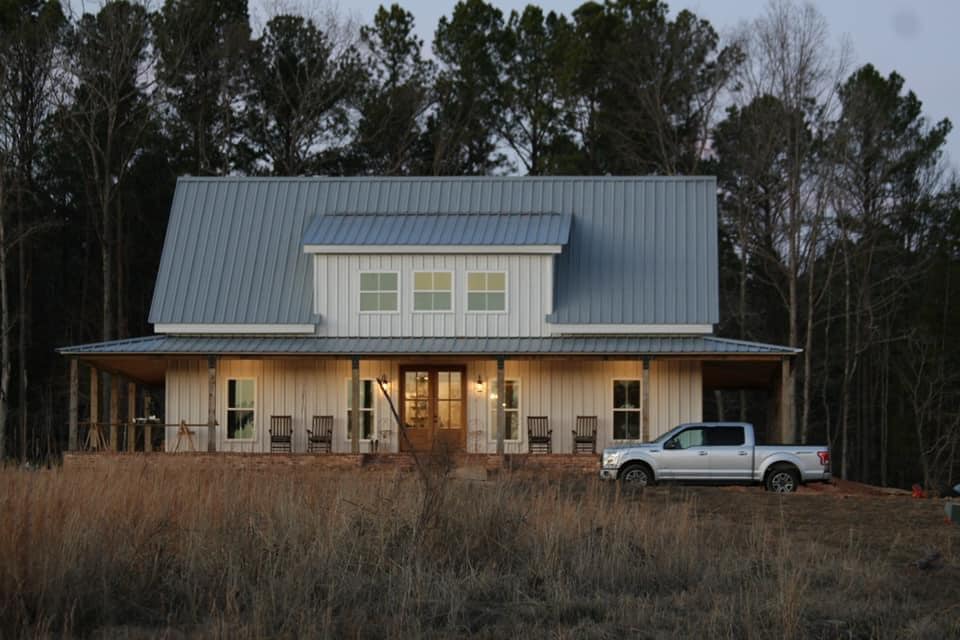
- You pick the plan. Choose a ready-made house plan (barndominium, farmhouse, ranch, modern, you name it) or have one designed, and modify it to fit your family.
- You control the budget. You decide where to splurge and where to save, rather than paying a production builder’s upgrade prices.
- No builder markup on the land. You aren’t paying a developer’s profit on the lot.
- Long-term value. A well-built custom home on a good piece of land often holds its value better than a cookie-cutter home.
What it takes: more decisions, more planning, and usually a construction loan rather than a regular mortgage. The steps generally look like this:
- Find and buy land (or use land you already own).
- Choose a house plan that fits the lot and your budget.
- Get bids from local builders and pick one.
- Line up a construction loan.
- Pull permits, build, and move in.
It’s more work than buying a tract home — but for many families, it’s the only way to get the home they actually want, where they actually want it.
Which Type of New Home Is Right for You?
- Tightest budget, fastest move-in: a manufactured or modular home.
- Want a move-in-ready new home in town with a predictable price: a tract home in a builder community.
- Want land, space, and a home designed around how you live: a custom home built on your own lot — whether that’s a barndominium-style home or something completely different.
Ready to dig deeper? Start with what it costs to build a new home in your state, how construction loans work, and what to look for when buying land to build on.