New Hampshire pulls in people who want a quieter, outdoorsy life within reach of Boston, with no state income tax or general sales tax. Commuters building in the southern tier, families moving north for space and schools, and retirees heading to the lakes and mountains all choose to build here. This guide covers costs, builders, loans, taxes, insurance and the land and permit steps.
Why Build a New Home in New Hampshire
The setting is a big part of the appeal. In a small state you get a short Atlantic coastline on the Seacoast, the Lakes Region around Lake Winnipesaukee, the White Mountains, and the Great North Woods. Wooded lots, lake frontage and mountain views are all realistic if you’re willing to look beyond the busiest towns.
The climate is continental. Southern New Hampshire is the mildest part of the state, while the north has colder, snowier winters. Expect a building season that slows down in winter, and a house that needs to be designed for snow, cold and freeze-thaw cycles.
Growth is concentrated in the south. The Manchester and Nashua areas, the towns along I-93 and Route 101, and the Seacoast around Portsmouth, Exeter and Dover see the most new construction. Concord, the Lakes Region and the Upper Valley around Lebanon and Hanover are also popular, and the North Country draws second-home buyers.
Types of New Homes in New Hampshire
There are several ways to get a new home here. For a full comparison, see our guide to types of new homes.
Custom Homes on Your Own Lot
This is the most common path for people building in New Hampshire. You buy the land (or already own it), pick or design a plan, and hire a builder. It lets you design around a view, a slope or a lake and choose how the home sits on the land.
Builder and Tract Communities
Production and regional builders put up homes in planned neighborhoods, mostly in southern New Hampshire around Manchester, Nashua and the Seacoast. You pick from set plans and options. It’s simpler and often faster, but there are fewer of these communities here than in larger states, and you give up control over the lot and design.
Manufactured and Modular Homes
Manufactured homes are factory-built to a federal HUD code and are the lowest-cost option. Modular homes are built in sections in a factory to the same codes as site-built homes and set on a permanent foundation. Modular construction is common in New England because it shortens time on site, which helps with a short building season.
Barndominiums
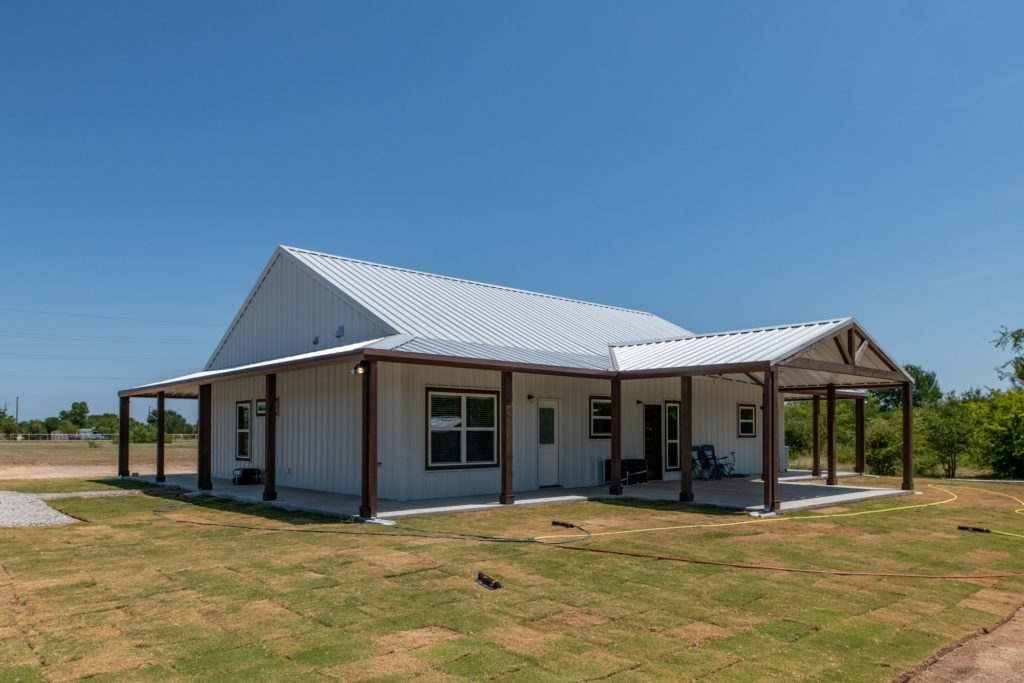
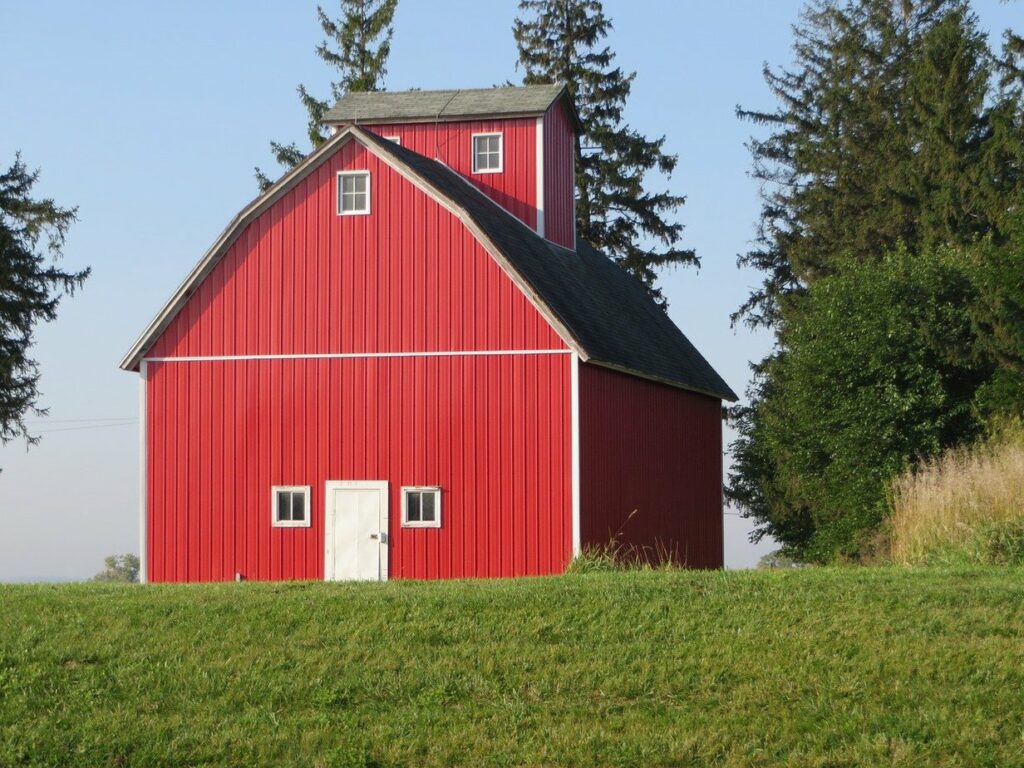
Barndominiums (barn-style homes, often with a large garage or workshop under the same roof) are popular in rural parts of many states and fit in well with New Hampshire’s farm and barn tradition. Most are now stick-framed like a standard house with metal siding and roofing, which makes them easier to finance and insure.
How Much Does It Cost to Build a Home in New Hampshire?
New Home Magazine estimates that building a new home in New Hampshire costs about $185–$280 per square foot for the house itself. For a 2,000-square-foot home, that works out to roughly $370,000–$560,000. These are our estimates; your final number depends on the plan, finishes and builder.
What pushes New Hampshire costs up or down:
- Ledge and frost: Rocky soil and ledge (bedrock near the surface) are common and can require blasting or extra excavation. Footings also need to go below the frost line, typically around 4 feet.
- Snow loads: Roofs must be built for heavy snow, especially in the north and the mountains.
- Labor market: Skilled trades are in demand, and builders near the Massachusetts border and on the Seacoast are often booked well ahead.
- Remote sites: Long driveways, steep lots and remote lake or mountain locations add site and delivery costs.
Land, site work, a well and septic system, utility hookups and permits are extra. To compare states, see what it costs to build a new home in all 50 states.
Custom Home Builders in New Hampshire
Here are some New Hampshire builders that build custom homes on land their clients own:
- ARoy Builders (Southern NH, Seacoast, Concord and Lakes Region): A full-service general contractor building fully custom homes, and it can help you evaluate or find a lot.
- Oxland Builders (Seacoast and Rockingham County): A design-build firm that builds custom homes and helps landowners with early zoning, septic, well and grading questions.
- Kill Mountain Building Co. (Lakes Region): Builds custom stick-built and modular homes on clients’ land, focusing on lake and mountain view sites.
- River Construction (Laconia and the Lakes Region): Builds custom homes in towns like Gilford, Belmont, Alton and Tilton, and assesses your property before you build.
New Hampshire doesn’t have a statewide license for general contractors, though electricians and plumbers must be state-licensed. That makes your own checking more important: confirm the builder carries liability and workers’ comp insurance, get a detailed written contract, call recent clients, and visit a home they’ve finished.
Construction Loans in New Hampshire
A construction loan pays the builder in stages (called draws) as work is completed. You typically pay only interest during the build, and many lenders offer a one-time close loan that converts into a regular mortgage when the house is done. Learn more about how construction loans work.
FHA and VA construction loans are options if you qualify. USDA home loans can help buyers in rural parts of New Hampshire, and much of the state outside the southern cities is eligible; check the USDA Rural Development New Hampshire page for details. Lenders that offer construction loans in the state include:
- Members First Credit Union: Offers single-close construction loans for building a home in New Hampshire, with interest-only payments during the build.
- Bellwether Community Credit Union: A New Hampshire credit union with a single-close loan that can cover both buying land and building.
- Country Living Loans from Farm Credit East: Offers construction-to-permanent loans and land loans for rural homes across the Northeast, including New Hampshire.
Property Taxes in New Hampshire
New Hampshire has some of the highest property taxes in the country. That’s the trade-off for having no broad income tax or sales tax, since towns and schools rely heavily on property taxes. Each town sets its own rate, so the same house can cost very different amounts to own depending on which side of a town line it sits.
New Hampshire doesn’t have a general homestead exemption, but towns can offer exemptions for older residents, veterans and people with disabilities, and some offer credits for things like solar. Compare tax rates between towns before you buy land, because it can make a big difference over time.
Home Insurance in New Hampshire
The main risks in New Hampshire are winter storms, heavy snow and ice, ice dams, nor’easters, and flooding along rivers and in low-lying coastal areas. Strong storms and the remnants of hurricanes can also bring damaging wind and rain.
Practical tips:
- Design for snow. A well-insulated, well-ventilated roof helps prevent ice dams, which are a common source of water damage claims.
- Check flood maps. Standard policies don’t cover flooding, so price out flood insurance if you’re near a river, lake or the coast.
- Plan for power outages. A generator and a backup heat source are worth considering in rural areas.
- Get a builder’s risk policy during construction.
For more, see our guide to home insurance for new homes.
Buying Land and Getting Permits in New Hampshire
Zoning is handled town by town, and most towns have zoning and minimum lot sizes. A few small towns have little or no zoning. Check the town’s rules on lot size, frontage and setbacks before you buy, and ask whether the lot is on a town-maintained road.
If the land isn’t on town sewer, you’ll need a septic system. In New Hampshire, a licensed septic designer does test pits to check the soil, and the state Department of Environmental Services approves septic designs and subdivisions. Make any land purchase contingent on a passing soil test. Lakefront lots also fall under the state’s Shoreland Water Quality Protection Act, which limits clearing and building near the water.
New Hampshire has a statewide building code based on the International Residential Code, but enforcement is local. Many towns have a building inspector and issue permits, while some small towns don’t. Frost depth is roughly 4 feet. For more on choosing land, read how to buy land to build a house.
House Plans for Your New Hampshire Home
Whether you want a classic New England cape, a modern farmhouse or a mountain cabin, you can browse plans for every style before you meet with a builder. For barndominium and farmhouse-style plans, take a look at BarndominiumPlans.com. For more barn-style ideas, Barndominium Life has plenty of inspiration.
Final Thoughts
Building in New Hampshire rewards careful planning around ledge, septic and town rules, and the high property taxes make it worth comparing towns before you buy. Get your land tested, talk to a few local builders early, and you’ll be well on your way.