Alaska draws people who want space, quiet and a real connection to the outdoors. Most new homes go up around Anchorage, the Mat-Su Valley, Fairbanks and the Kenai Peninsula, and a large share are custom homes built on land the owner already has.
Why Build a New Home in Alaska
Alaska is the largest state by area and one of the least populated, which is why it’s nicknamed “The Last Frontier.” That means land is easier to find here than almost anywhere else, though access, roads and utilities matter a lot more than they do in the Lower 48.
The climate shapes everything. Winters are long, dark and cold, especially in the Interior around Fairbanks. Summers are short but bright, with close to 20 hours of daylight in parts of the state. Southcentral Alaska (Anchorage, the Mat-Su and the Kenai) is milder than the Interior, while Southeast Alaska (Juneau, Ketchikan, Sitka) is wet and rainy rather than bitterly cold.
The main growth area is the Mat-Su Valley around Wasilla and Palmer, where buyers find bigger lots than in Anchorage and a reasonable commute. Fairbanks and North Pole stay steady thanks to military bases and the university, and the Kenai Peninsula around Soldotna, Kenai and Homer appeals to people who want to fish and live on the water.
Types of New Homes in Alaska
There are several types of new homes to choose from, and in Alaska the right one often depends on where your land is and how easy it is to get materials and crews there.
Custom homes on your own lot. This is the most common path for Alaskans who already own land or buy a parcel outside town. You choose the plan, the builder and the level of insulation and heating, which matters a lot here. Many builders in Anchorage, the Mat-Su and Fairbanks will build on your lot.
Builder communities. Planned neighborhoods are mostly found in Anchorage, Eagle River and the Mat-Su Valley. These homes are usually faster to buy and easier to finance, but you get less choice over the design and lot size.
Manufactured and modular homes. These are built in a factory and shipped in. They can save money, but shipping to Alaska adds cost, and the home has to be rated for the cold and snow loads where you’ll place it.
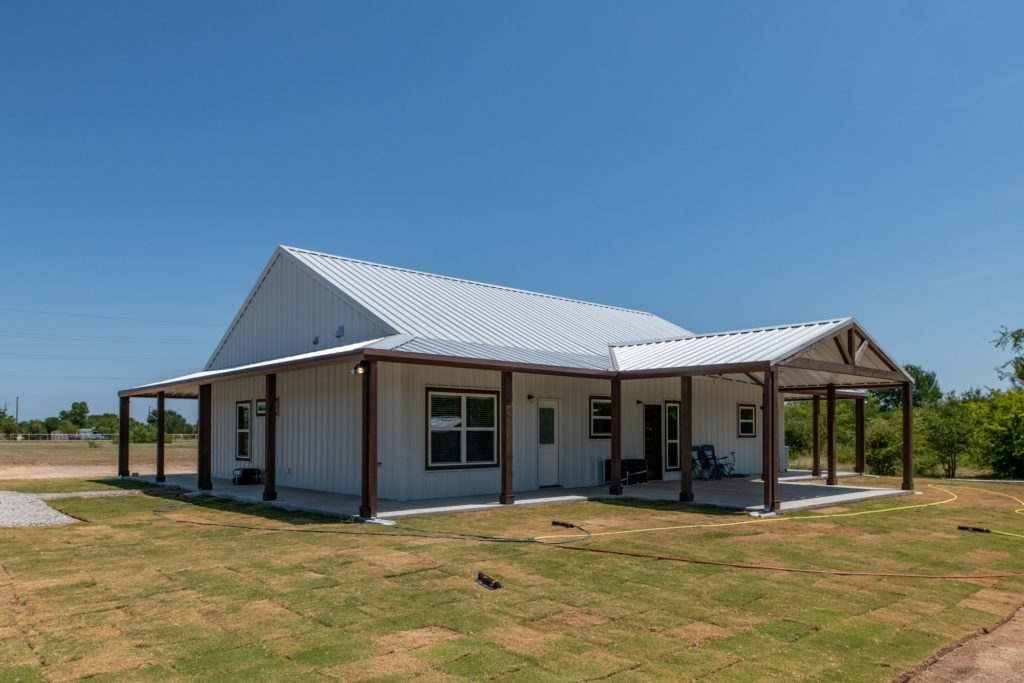
Barndominiums. Barndominiums (homes with a barn-style shell and open living space, often with a big shop attached) are popular in rural parts of many states, and Alaska is no exception. Most are now stick-framed (built with wood framing like a regular house) rather than all steel, which makes them easier to insulate for Alaska winters.
How Much Does It Cost to Build a Home in Alaska?
New Home Magazine estimates that building a home in Alaska costs about $195–$300 per square foot for the house itself. For a 2,000-square-foot home, that works out to roughly $390,000–$600,000.
Several things push Alaska costs up. Almost every building material is shipped in by barge, truck or plane, so the farther you are from Anchorage or Fairbanks, the more you’ll pay. Foundations have to deal with deep frost and, in parts of the Interior and the North, permafrost (ground that stays frozen year-round and can shift if it thaws). Homes also need heavy insulation, good air sealing and heating systems sized for long cold stretches, and the building season is short, which limits how many crews are available.
Costs come down when you build on the road system near a larger town, pick a simple floor plan, and schedule early so your builder can plan around the season.
Keep in mind that these figures cover the house only. Land, site work (clearing, driveway, gravel pad), a well and septic system, utility hookups and permits are all extra, and in remote areas they can add a lot. For a state-by-state comparison, see what it costs to build a new home in all 50 states.
Custom Home Builders in Alaska
Here are some Alaska builders that build custom homes, several of which will build on your own land:
- Hall Quality Homes (Wasilla / Mat-Su Valley): A Mat-Su builder that offers customizable house plans and will build on your lot or one of theirs.
- Spinell Homes (Anchorage, Eagle River, Palmer and Wasilla): Builds semi-custom and one-of-a-kind custom homes and has a build-on-your-lot program.
- Norrland Builders (Fairbanks): Offers custom home design and build services in the Fairbanks area, along with renovations and shop buildings.
- Byler Contracting (Mat-Su, Fairbanks/North Pole, Soldotna and Homer): Builds everything from starter homes to custom homes in several regions of the state.
- Rickman Building Company (Kenai Peninsula): Builds custom timber homes designed for sub-zero winters, plus remodels and energy upgrades.
Before you sign, check that the builder holds a current Alaska contractor license with the residential endorsement the state requires for building homes, and ask for proof of insurance. Call a few past clients, and if you can, walk through a home they finished at least one winter ago so you can ask how it heated and held up.
Construction Loans in Alaska
A construction loan pays your builder in stages (called draws) as the work gets done, instead of handing over the full amount up front. During the build you usually pay interest only. When the home is finished, the loan either converts to a regular mortgage or you refinance into one. Read our guide to how construction loans work for the full picture.
Government-backed loans can help too. FHA loans allow smaller down payments, VA loans are a strong option for the many veterans and service members in Alaska, and USDA loans can work for rural parts of the state, which covers much of Alaska outside Anchorage. Not every lender offers these programs for new construction, so ask early.
Lenders and programs to look at:
- Spirit of Alaska Federal Credit Union: Offers construction and renovation loans, including loans to buy land and build a new home.
- First Bank: A Southeast Alaska bank (Ketchikan, Juneau, Sitka and other towns) that offers home construction loans.
- Alaska Housing Finance Corporation (AHFC): The state’s housing finance agency. Its programs work through approved lenders, and it has rural loans that can provide long-term financing for owner-built new homes in small communities.
If you plan to use an AHFC program, talk to your lender before you build. AHFC has its own construction and energy standards, and a home that isn’t inspected and energy rated during construction may not qualify for some programs.
Property Taxes in Alaska
Alaska has no statewide property tax. Property taxes are set by boroughs and cities, so what you pay depends heavily on where you build. Some cities and boroughs have fairly high local taxes, while parts of the state outside any taxing borough or city have little or none. Because there’s no state-level tax, Alaska’s ranking depends almost entirely on your local area, so check the borough and city rates before you buy land.
State law requires every municipality to exempt the first $150,000 of assessed value on the primary home of a senior aged 65 or older, or a disabled veteran with a service-connected disability of 50% or more. Local governments can also offer an optional residential exemption, so check with your borough or city assessor.
Home Insurance in Alaska
Alaska homes face risks that are different from the Lower 48. Earthquakes are a real concern, especially in Southcentral Alaska, and standard home policies don’t cover them, so you’ll need a separate earthquake policy or endorsement. Heavy snow loads, frozen and burst pipes, ice dams on the roof and wildfire in the Interior are other common issues. Flooding along rivers and the coast also needs its own policy.
Practical tips: build with a roof designed for your local snow load, protect plumbing from freezing, keep brush cleared around the home if you’re in a wildfire area, and ask your agent about earthquake and flood coverage before you close. See our guide to home insurance for new homes for more.
Buying Land and Getting Permits in Alaska
Rules vary a lot depending on where you build. Anchorage, Fairbanks, Juneau and some other cities have adopted building codes and require permits and inspections. Many rural areas, including much of the Mat-Su Borough and towns like Homer, have no adopted building code for single-family homes, which means inspections are optional and handled by private inspectors. Some lenders and AHFC programs still require inspections and an energy rating, so plan for them either way.
Much of rural Alaska has little or no zoning. That gives you freedom, but it also means you should check road access, easements (rights others have to cross your land) and whether the lot can support a well and septic system. Septic systems should be installed by a state-certified installer, and soils, groundwater and permafrost all affect what kind of system will work.
Frost depth in Alaska is deep and varies widely, so foundations should be designed for your site. In permafrost areas, get a soils report before you buy. For more on picking a parcel, see how to buy land to build a house.
House Plans for Your Alaska Home
A good plan for Alaska keeps the shape simple, puts a mudroom or arctic entry at the door, and leaves room for thick walls and a well-sized heating system. You can browse plans for every style, from cabins to two-story family homes. For barndominium and farmhouse-style plans, visit BarndominiumPlans.com, and for barndominium inspiration, take a look at Barndominium Life.
Final Thoughts
Building in Alaska takes more planning than in most states, mainly because of shipping, weather and the short building season. Start with the right piece of land, pick a builder who knows your region, and line up financing early, and you’ll end up with a home that’s built for the place you live.