Idaho has been one of the fastest-growing states in the country, and much of that growth comes from people building new homes. Buyers come for open space, outdoor recreation, and a slower pace, whether that means a custom home on acreage in the Treasure Valley, a lake home in North Idaho, or a farmhouse in the Magic Valley or eastern Idaho.
Why Build a New Home in Idaho
There’s still land to build on. Outside the cities, Idaho has plenty of farmland, ranchland, and timbered parcels. Acreage is easier to find in places like Canyon County, the Magic Valley, and eastern Idaho than in the Boise foothills or around Coeur d’Alene, where prices are higher.
Four real seasons. Southern Idaho is high desert, with hot, dry summers and cold winters. North Idaho is greener and gets more snow. Mountain towns like McCall, Sun Valley, and Driggs see heavy snow and short building seasons, which affects both design and cost.
Growth areas. The Treasure Valley (Boise, Meridian, Nampa, Eagle, Star, Kuna, and Caldwell) is the state’s biggest growth area. North Idaho (Coeur d’Alene, Post Falls, Hayden, Rathdrum, and Sandpoint), the Magic Valley (Twin Falls, Jerome, Burley), and eastern Idaho (Idaho Falls, Ammon, Rexburg, Rigby, and Pocatello) are also seeing steady new construction.
Lifestyle. Rivers, lakes, ski hills, hunting, and public land are close to almost every town. Many people move to Idaho for space and a lower cost of living than nearby West Coast states.
Types of New Homes in Idaho
Here’s a quick look at the main types of new homes you’ll find in Idaho.
Custom homes on your own lot. You own the land, and the builder designs and builds a home to fit it. This is a popular choice in Idaho because so many buyers want acreage, shop space, or mountain views. Many Idaho builders will build on land you already own or help you find a lot.
Builder communities. New subdivisions are everywhere in the Treasure Valley, especially in Meridian, Nampa, Kuna, Star, and Caldwell, and they’re common around Post Falls and Idaho Falls too. You pick from set floor plans, and the builder handles the lot and permits.
Manufactured and modular homes. Manufactured homes are built in a factory to a federal code and set on site. Modular homes are also built in a factory but meet the same codes as site-built homes. Both can lower costs or speed up a build, especially in remote areas, though some subdivisions don’t allow them.
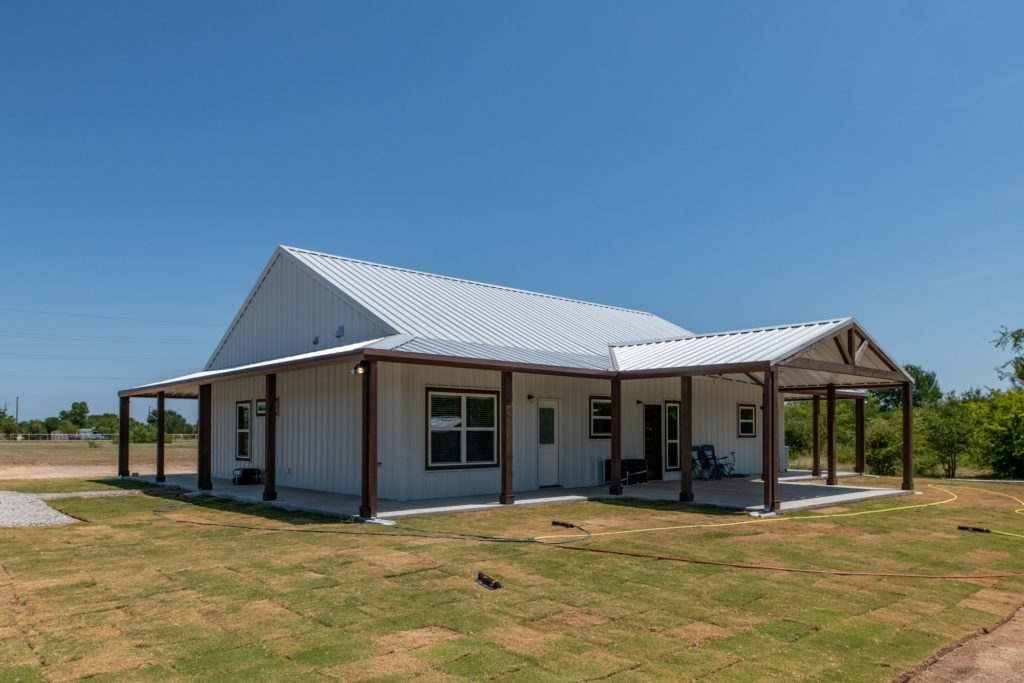
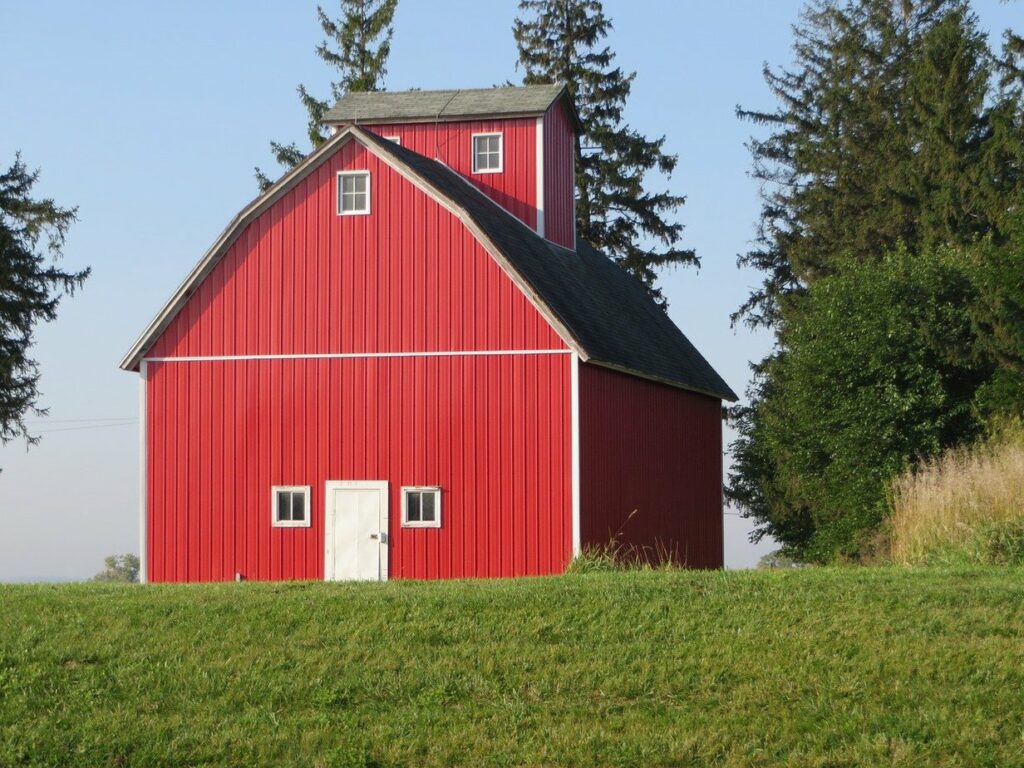
Barndominiums. Barndominiums (barn-style homes, often with a big shop attached) are popular in rural parts of many states, and Idaho’s farm country is no exception. Most are now stick-framed with wood like a regular house, though some use steel or post-frame construction.
How Much Does It Cost to Build a Home in Idaho?
New Home Magazine estimates that building a home in Idaho costs about $175 to $265 per square foot for the house. For a 2,000-square-foot home, that’s roughly $350,000 to $530,000.
What moves the number up or down in Idaho:
- Frost depth and foundations: Cold winters mean deeper footings than in the South. Many homes use crawlspaces, and basements are common in some areas.
- Snow loads: Mountain and North Idaho homes need roofs built for heavy snow, which adds framing cost.
- Earthquakes: Parts of Idaho have real earthquake risk, and building codes there call for extra bracing in some areas.
- Labor: Fast growth in the Treasure Valley and North Idaho has kept skilled trades busy, which can mean higher bids and longer schedules.
- Remote sites: Cabins and homes far from town cost more because of travel time, delivery costs, and a shorter building season.
These numbers cover the house only. Land, site work, a well and septic system for rural lots, power extensions, impact fees, and permits are extra. For a state-by-state look, see what it costs to build a new home in all 50 states.
Custom Home Builders in Idaho
Here are several established custom home builders from different regions of Idaho:
- Solitude Homes (Boise): Builds luxury custom homes in Boise, Meridian, Eagle, and Star, including on a client’s own land.
- Belveal Construction (Meridian): A custom home builder serving the Boise area for more than 25 years.
- Wolverton Homes (Twin Falls): Builds custom homes in the Magic Valley, whether you already own land or need help finding a homesite.
- SwagerBuilds (Rigby/Idaho Falls): A design-build firm that builds custom homes on your lot or one it helps you find in eastern Idaho.
- Clearwater Custom Homes (Pocatello): Builds custom homes in the Pocatello and Chubbuck area of East Idaho.
- Monarch Custom Homes (Coeur d’Alene): A boutique custom home builder serving Coeur d’Alene and North Idaho.
Idaho requires most contractors to register with the state’s Division of Occupational and Professional Licenses (DOPL), so ask for a registration number and look it up. Also ask for proof of liability insurance, call recent clients, and tour a finished home before you sign.
Construction Loans in Idaho
A construction loan covers the cost of building. The lender pays the builder in stages (called “draws”) as work is completed and inspected, and you typically pay interest only until the home is finished. Then the loan turns into a regular mortgage, or you refinance. A “one-time close” construction loan combines both steps into one closing. Learn more about how construction loans work.
FHA loans can reduce your down payment, VA loans are available to eligible veterans, and USDA loans are designed for rural areas, which covers much of Idaho outside Boise, Coeur d’Alene, and Idaho Falls.
Lenders that offer construction or home loans in Idaho include:
- Idaho Central Credit Union (ICCU): Offers construction and land loans along with standard mortgages.
- AgWest Farm Credit: A Farm Credit lender with Idaho branches that offers country home, land, and construction loans.
- Ireland Bank: An Idaho bank based in Malad City that offers mortgages; ask about construction financing.
Property Taxes in Idaho
Idaho’s property taxes are below the national average, though bills vary by county and have climbed in fast-growing areas as home values rose.
The most important break is the homeowner’s exemption. If the home is your main residence, it exempts 50% of the value of your home and up to one acre of land, up to a cap ($125,000 in recent years). Apply with your county assessor once the home is finished. There’s also a property tax reduction program for qualifying seniors, people with disabilities, and others with limited income.
Home Insurance in Idaho
Idaho insurance is often less expensive than in hurricane or tornado states, but there are risks to plan for:
- Wildfire: Forested and rangeland areas, especially in the mountains and North Idaho, face wildfire risk. Fire-resistant roofing and cleared space around the home can help with coverage.
- Snow load and ice: Heavy snow can damage roofs, and ice dams can cause leaks.
- Earthquakes: Standard home policies don’t cover earthquake damage. Earthquake coverage is usually a separate add-on.
- Flooding: Spring snowmelt and river flooding happen in some areas, and flood insurance is separate from a standard policy.
Ask your agent about discounts for new construction, impact-resistant roofs, and bundling. Read more about home insurance for new homes.
Buying Land and Getting Permits in Idaho
Zoning: Cities and counties set zoning. Many rural counties have agricultural zoning with minimum lot sizes, and some areas have fairly loose rules compared with cities. Check whether a parcel can legally get a building permit before you buy.
Septic and wells: Septic permits are handled by Idaho’s regional public health districts, which review soil and site conditions. Rural lots usually need a well, and in some areas water availability is a concern, so check nearby well depths.
Frost depth: Frost depth varies widely, from shallow in the warmest valleys to much deeper in the mountains. Your local building department sets the required footing depth.
Building codes: Idaho adopts building codes at the state level, but local cities and counties handle most residential permits and inspections. Some rural areas have limited residential inspections, so confirm what applies to your lot.
Access and power: Mountain and rural parcels may need long driveways, easements, or costly power line extensions. Get estimates before you close.
For more on picking a site, read how to buy land to build a house.
House Plans for Your Idaho Home
Modern farmhouse, mountain craftsman, ranch homes with big shops, and lake cabins all fit Idaho well. You can browse plans for every style before you meet with a builder. For barndominium and farmhouse-style plans, see BarndominiumPlans.com. For barndo inspiration, check out Barndominium Life.
Final Thoughts
Idaho still offers space, scenery, and a solid group of local builders who will build on your land. Check water, septic, and access before you buy a lot, and get your construction loan lined up early.