Colorado draws people who want mountain views, sunshine, and room to spread out. New homes are going up along the Front Range from Fort Collins to Pueblo, on acreage east of Denver and Colorado Springs, and in mountain and Western Slope towns. Many buyers want a custom home on their own lot, where they can design around the views and the land.
Why Build a New Home in Colorado
Land comes in many forms. You can find city lots along the Front Range, 5- to 35-acre parcels on the eastern plains and in the foothills, and mountain lots in places like Summit County, the San Juans, and around Durango. Mountain land is often pricier and harder to build on, while the plains east of I-25 usually offer more space for less money.
The climate is dry and sunny, with real winters. Most of the state gets plenty of sun and low humidity, but snow, cold snaps, big temperature swings, and hailstorms are part of life. At higher elevations, heavy snow loads and long winters shape how homes are designed.
Growth areas. Northern Colorado (Fort Collins, Loveland, Greeley, Windsor, Timnath), the Denver suburbs (Douglas, Arapahoe, Adams, and Elbert counties), Colorado Springs and El Paso County (including Black Forest, Monument, and Falcon), and Pueblo West are all busy with new construction. On the Western Slope, Grand Junction and Montrose are growing, as are mountain markets like Durango and Pagosa Springs.
Lifestyle. Skiing, hiking, hunting, and fishing are all close by, and Colorado’s cities have strong job markets in tech, aerospace, health care, and government.
Types of New Homes in Colorado
Colorado buyers have several options. Here’s a quick guide to the main types of new homes you’ll see in the state.
Custom homes on your own lot. You buy land (or use land you own), choose or design a plan, and hire a builder. This is the best way to take advantage of a view lot, a sloped mountain site, or acreage on the plains. Expect more steps, like soil tests, well and septic planning, and county approvals.
Builder communities. Master-planned communities are common around Denver, Colorado Springs, and Northern Colorado. You pick a floor plan and finishes, and the builder handles the lot and permits. It’s usually the fastest and most predictable route.
Manufactured and modular homes. Manufactured homes are built in a factory to a federal code and delivered in sections. Modular homes are also factory-built but meet the same local codes as site-built homes, which can help in mountain areas with short building seasons. Some towns and subdivisions restrict manufactured homes, so check first.
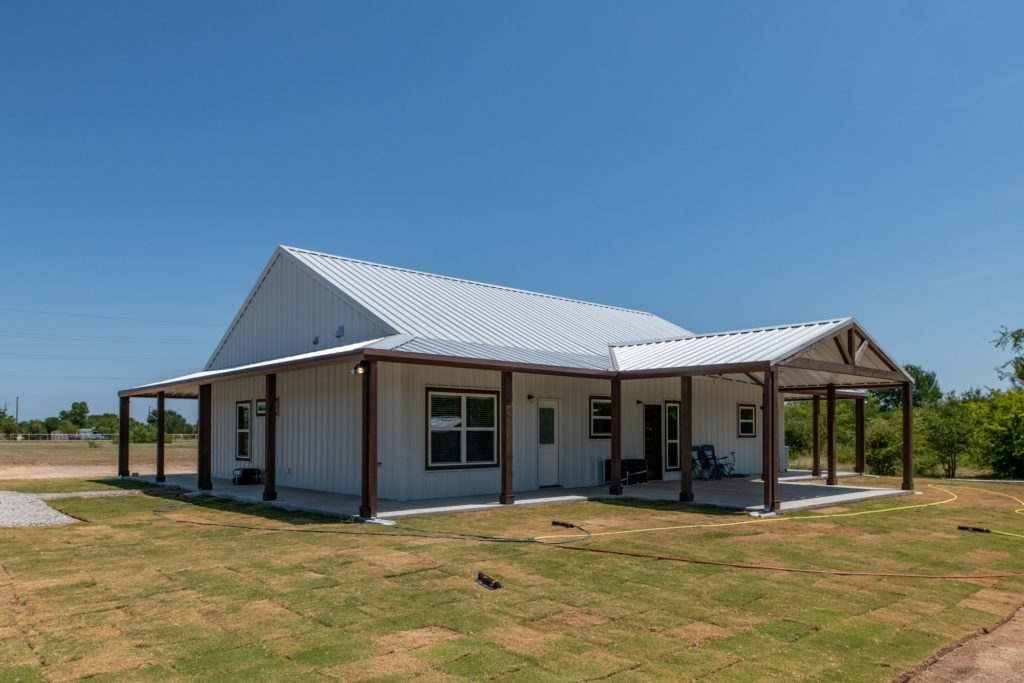
Barndominiums. Barndominiums (barn-style homes, often with a large shop or garage under one roof) are popular in rural parts of many states, including the plains and southern Colorado. Most are now stick-framed with wood like a regular house, though some use steel or post-frame construction.
How Much Does It Cost to Build a Home in Colorado?
New Home Magazine estimates that building a home in Colorado costs about $190 to $285 per square foot for the house itself. For a 2,000-square-foot home, that’s roughly $380,000 to $570,000.
Several things push Colorado costs up or down:
- Foundations and soils: Frost depth is deeper than in the South, and parts of the Front Range have expansive soils (clay that swells when wet). These can call for engineered foundations, which add cost.
- Snow and wind loads: Mountain homes need stronger roofs and framing to carry heavy snow, and some areas have high wind requirements.
- Wildfire rules: In fire-prone areas, counties may require fire-resistant roofing, siding, and defensible space around the home.
- Labor and access: Skilled labor is in demand along the Front Range, and remote or high-elevation sites cost more because of travel time, steep driveways, and a shorter building season.
- Energy codes: Many Colorado jurisdictions have adopted newer energy codes, which can add to insulation and equipment costs but lower utility bills.
These estimates are for the house only. Land, site work, driveways, wells, septic systems, utility extensions, tap fees, and permits are extra, and tap and impact fees can be significant in some towns. Compare Colorado with other states in our guide to what it costs to build a new home in all 50 states.
Custom Home Builders in Colorado
Here are several established builders in different parts of Colorado that build custom homes:
- NoCO Custom Homes (Northern Colorado): Builds custom and semi-custom homes in Larimer, Weld, and Boulder counties and has a build-on-your-lot process.
- Hi-Point Home Builders (Colorado Springs): Builds custom homes across El Paso County, including on a client’s own home site.
- Haley Custom Homes (Denver): A luxury custom home builder serving the Denver area.
- Drop Tine Construction (Pueblo West): Builds custom homes, garages, and barndominiums across southern Colorado.
- Asher Custom Homes (Durango): A design-build firm building custom homes in southwest Colorado, including Pagosa Springs and Telluride.
- Decker Custom Homes (Summit County): Builds custom mountain homes in Summit County, including Breckenridge.
Colorado doesn’t have a statewide license for general home builders, so check with your city or county, since many require contractors to register or be licensed locally. Ask for proof of liability insurance, talk to past clients, and tour a home the builder has finished, ideally one built on a site like yours.
Construction Loans in Colorado
A construction loan pays for the home as it’s being built. The lender releases money in stages (called “draws”) after each phase is inspected, and you usually pay interest only during construction. When the home is finished, the loan converts to a regular mortgage, or you refinance into one. A “one-time close” loan handles both steps with a single closing. Learn more about how construction loans work.
FHA construction loans can lower your down payment, VA loans work for eligible veterans (Colorado has a large military community around Colorado Springs), and USDA loans are designed for rural areas, which includes much of the eastern plains and many mountain counties.
Lenders that offer construction or rural home loans in Colorado include:
- Elevations Credit Union: A Colorado credit union whose home lending includes construction loans.
- Rural 1st: Offers construction, land, and rural home loans in Colorado through Farm Credit of Southern Colorado and American AgCredit.
Property Taxes in Colorado
Colorado’s property taxes are below the national average. Your county assessor sets your home’s value, a state assessment rate turns that into “assessed value,” and local tax rates (called mill levies) are applied to it. Bills vary widely by county and special district, so new subdivisions with metro districts can carry higher bills than older neighborhoods.
Colorado doesn’t offer a general homestead exemption for all homeowners. It does offer a senior homestead exemption for people 65 and older who have owned and lived in their home for at least 10 years, and a similar exemption for qualifying disabled veterans. Both cut taxes on part of the home’s value.
Home Insurance in Colorado
Colorado has seen some of the fastest-rising home insurance costs in the country, mostly because of hail and wildfire:
- Hail: A state analysis found hail is the biggest driver of premiums. Impact-resistant (Class 4) or fortified roofs can lower your premium, and the state estimated a fortified roof could save El Paso County homeowners hundreds of dollars a year.
- Wildfire: Homes in forested and foothill areas face higher wildfire risk, and some insurers limit coverage there. Fire-resistant materials and cleared space around the house help protect the home and make it easier to keep a policy. Colorado’s FAIR Plan, launched in 2025, is an insurer of last resort for homeowners who can’t find coverage.
- Snow and wind: Heavy snow and strong winds can damage roofs, especially in the mountains.
- Flooding: Flash floods happen along creeks and in burn scars, and standard policies don’t cover flood damage.
Get quotes before you choose a lot. In high-risk areas, insurance can be a real cost. Read more about home insurance for new homes.
Buying Land and Getting Permits in Colorado
Zoning: Counties and towns set zoning, and Colorado law allows rural parcels of 35 acres or more to be created without going through the county subdivision process. These “35-acre parcels” are common on the plains and in the foothills. Smaller rural lots may come with covenants or HOA rules.
Water: Water rights are a big deal in Colorado. Many rural lots rely on a well, and the type of well permit you can get from the state may limit how you can use the water. Confirm it before you buy.
Septic: Septic systems (called OWTS in Colorado) follow state rules and are permitted by county health departments. You’ll need a soil evaluation and an engineered design on many sites.
Frost depth: Frost depth is set locally and is deeper at higher elevations, so footings in the mountains go deeper than in Denver or Pueblo.
Building codes: Colorado doesn’t have one statewide building code. Each city and county adopts its own, and requirements for energy efficiency, snow load, and wildfire protection vary. Some rural counties have limited permitting, so check with the county building department.
Before you buy, read our guide on how to buy land to build a house.
House Plans for Your Colorado Home
Mountain modern, ranch, craftsman, and farmhouse styles all work in Colorado, and many buyers want big windows to frame the views. You can browse plans for every style and adapt them to your site. For barndominium and farmhouse-style plans, check out BarndominiumPlans.com. For barndo ideas and inspiration, visit Barndominium Life.
Final Thoughts
Building in Colorado takes more planning than in many states because of water, soils, hail, and wildfire risk. Line up your lot, insurance quotes, and a construction loan early, and work with a builder who knows your part of the state.