South Dakota attracts people who want open space, a low cost of living and no state income tax. Families moving to the booming Sioux Falls area, buyers who want a home in the Black Hills, and rural folks building on farm ground or a few acres all find plenty of room to build here. This guide covers costs, builders, loans, taxes, insurance and the land and permit steps.
Why Build a New Home in South Dakota
Space is the obvious draw. South Dakota has wide-open prairie and farmland in the east, the Missouri River and its big reservoirs through the middle, ranch country in the west, and the pine-covered Black Hills in the southwest. Rural land is plentiful, and acreage near town is still affordable in many areas.
The climate is continental and can be harsh. Summers are warm to hot, winters are cold and windy with blowing snow, and big temperature swings are common. Homes here need deep foundations, good insulation and roofs that handle snow and wind. The building season is mostly spring through fall.
Growth is concentrated in a few places. The Sioux Falls metro, including Harrisburg, Tea, Brandon and Hartford, is one of the fastest-growing areas in the upper Midwest. Rapid City, Box Elder, Spearfish and other Black Hills towns are growing quickly too, and Brookings, Watertown, Aberdeen, Mitchell and Pierre see steady building.
Types of New Homes in South Dakota
There are several ways to get a new home here. For a full comparison, see our guide to types of new homes.
Custom Homes on Your Own Lot
With so much land available, building a custom home on your own lot is a natural fit in South Dakota. You buy the land (or already own it), choose or design a plan, and hire a builder. You control the layout, finishes and how the house sits on the land, which matters a lot here for blocking wind and catching winter sun.
Builder and Tract Communities
Builders put up homes in planned subdivisions, mainly around Sioux Falls and Rapid City. Many local builders also sell lots in their own developments and build spec homes. You choose from set plans and options, which is simpler and faster, but you give up some control over the lot and design.
Manufactured and Modular Homes
Manufactured homes are factory-built to a federal HUD code and are the most affordable way to get a new home, especially in rural areas. Modular homes are also built in a factory but meet the same codes as site-built homes and sit on a permanent foundation. Factory building can help get around the short outdoor building season.
Barndominiums
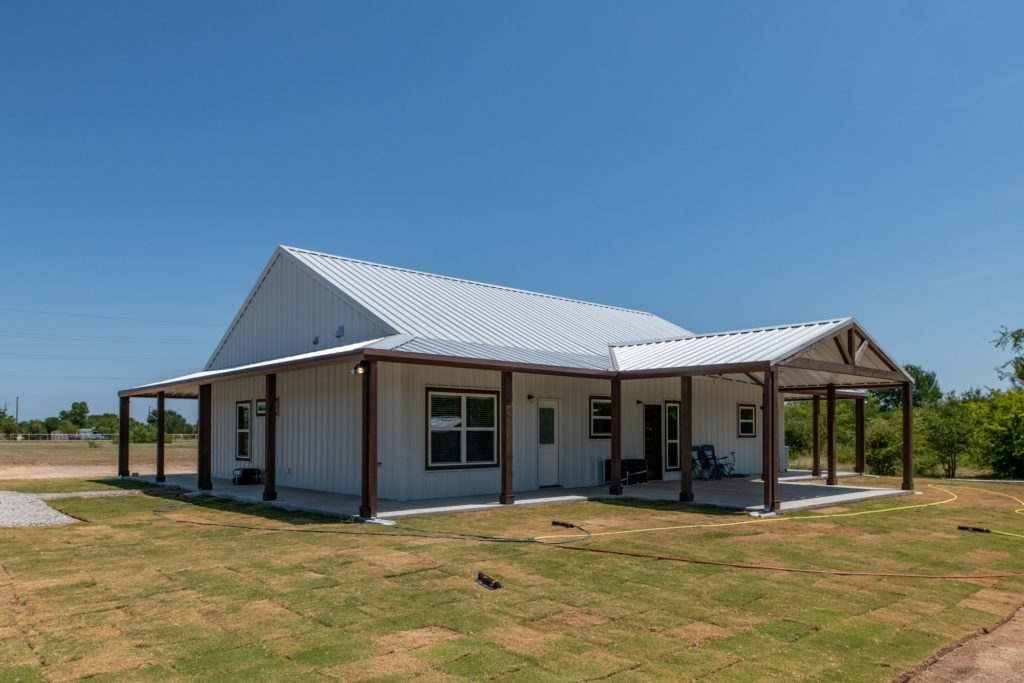
Barndominiums (barn-style homes, often with a big shop or garage under the same roof) are popular in rural parts of many states, and South Dakota’s farm and ranch country is a natural fit. Most are now stick-framed like a standard house with metal siding and roofing, which makes them easier to finance, insure and insulate.
How Much Does It Cost to Build a Home in South Dakota?
New Home Magazine estimates that building a new home in South Dakota costs about $155–$240 per square foot for the house itself. For a 2,000-square-foot home, that’s roughly $310,000–$480,000. These are our estimates; your actual cost depends on the plan, finishes and builder.
What drives South Dakota costs:
- Frost depth: Footings must go below the frost line, which is about 42 to 48 inches or more depending on location, and many homes include a full basement.
- Labor market: Fast growth around Sioux Falls and Rapid City keeps builders busy. Rural areas may have fewer builders, so you may wait longer or pay travel costs.
- Snow and wind: Roofs and framing need to handle snow loads and strong winds.
- Remote sites: Rural and Black Hills sites can add costs for road access, utilities and material delivery.
Land, site work, a well and septic system, utility hookups and permits are all extra. To compare states, see what it costs to build a new home in all 50 states.
Custom Home Builders in South Dakota
Here are some South Dakota builders that build custom homes, including on land their clients own:
- Scott Gilbert Home Construction (Sioux Falls and Harrisburg area): Builds custom single-family homes and will work with you whether you already have a lot or need help finding one.
- Prairie Hills Construction (Northern Black Hills): Builds custom homes in Spearfish, Sturgis, Belle Fourche, Lead, Deadwood and nearby, and will assess a lot you already own or help you find one.
- Rae Marie Homes (Spearfish and the Black Hills): A family-owned design-build company building custom homes and mountain retreats across the Black Hills, with lot evaluation services.
Other established local builders, including several around Sioux Falls and the Watertown and Brookings area, also build custom homes; ask each one directly whether they’ll build on your land. South Dakota doesn’t license general contractors at the state level, though electricians and plumbers are state-licensed and some cities have their own rules. Ask for proof of liability and workers’ comp insurance, call recent clients, and visit a home the builder has finished.
Construction Loans in South Dakota
A construction loan pays your builder in stages (called draws) as the work is done. You usually make interest-only payments during the build, and many lenders offer a one-time close loan that turns into a regular mortgage when you move in. Learn more about how construction loans work.
FHA and VA construction loans are options if you qualify, and USDA loans are a strong fit for rural parts of South Dakota, which covers most of the state outside Sioux Falls and Rapid City. Lenders that offer construction loans in South Dakota include:
- Black Hills Federal Credit Union: Has branches in Rapid City, Sioux Falls, Spearfish and other towns, and offers single-close construction loans with up to 12 months of interest-only payments.
- Rural 1st: Offers construction loans for rural properties in South Dakota through Farm Credit Services of America.
Local community banks around the state also make construction loans, so it’s worth calling a few near where you plan to build.
Property Taxes in South Dakota
South Dakota has no state income tax, so local governments lean on property taxes. Overall, property taxes are about average to slightly above average compared with other states. Your county director of equalization sets your home’s value, and your bill depends on the combined levies for your county, school district, city or township and other local districts.
If the home is your main residence, it can qualify as owner-occupied, which gets a lower school tax levy than other property. You must apply with your county to get that classification. South Dakota also has property tax relief programs for older residents and people with disabilities who meet income limits.
Home Insurance in South Dakota
South Dakota’s biggest risks are hail, severe thunderstorms, high winds, tornadoes and blizzards. Hail is one of the most common causes of home insurance claims in the state. Flooding can be a problem along the Missouri, James and Big Sioux rivers, and the Black Hills and western prairie face wildfire risk.
Practical tips:
- Choose impact-resistant roofing. Class 4 shingles or metal roofing hold up better to hail and may earn a discount.
- Know your wind and hail deductible, which may be a percentage of your home’s value rather than a flat dollar amount.
- Standard policies don’t cover flooding, so price out flood insurance if you’re near a river.
- In the Black Hills, use fire-resistant materials and keep a cleared space around the house.
- Get a builder’s risk policy while the home is under construction.
For more, see our guide to home insurance for new homes.
Buying Land and Getting Permits in South Dakota
Zoning varies a lot. Cities and growing counties around Sioux Falls and Rapid City have zoning and subdivision rules, but many rural counties have little or no zoning. That gives you more freedom but less control over what can be built nearby, so check with the county before you buy.
If the land isn’t on city sewer, you’ll need a septic system. South Dakota’s Department of Agriculture and Natural Resources sets the rules, and installers must be state-certified. A soil test (perc test) shows whether the land can handle a septic system, so make your purchase contingent on it. Also confirm access to water, either rural water service or a well.
South Dakota doesn’t have a mandatory statewide residential building code. Cities and some counties adopt the International Residential Code and issue permits and inspections, while many rural areas have no building inspections at all. Even where they aren’t required, building to code protects your investment and helps with financing and insurance. Plan for a deep frost line when budgeting your foundation. For more on choosing land, read how to buy land to build a house.
House Plans for Your South Dakota Home
Whether you want a ranch with a walkout basement, a Black Hills mountain home or a modern farmhouse on acreage, you can browse plans for every style before you meet with a builder. For barndominium and farmhouse-style designs, check out BarndominiumPlans.com.
Final Thoughts
South Dakota offers wide-open land, no state income tax and fast-growing towns, but the climate and the lack of rules in some rural areas call for careful planning. Check zoning, septic and water early, build for hail and wind, and compare a few local builders and lenders before you commit.