California is one of the most expensive places in the country to buy a house, which is exactly why so many families look at building instead. Buyers from the Bay Area, Los Angeles, and San Diego often head inland or north for land, while longtime locals rebuild after wildfires or build a forever home on family property. Building here takes more planning than in most states, but it can get you a newer, safer, more efficient home than anything on the resale market.
Why Build a New Home in California
California is huge and varied, so where you build changes almost everything. The coast has mild weather year-round but very little vacant land and high lot prices. The Central Valley, from Redding down through Sacramento, Fresno, and Bakersfield, has far more affordable acreage, hot summers, and a farm-country pace. The Sierra foothills (Placer, El Dorado, Nevada, and Amador counties) draw people who want trees, views, and room to spread out. Inland Southern California, including the Inland Empire, Temecula Valley, and the high desert, is where much of the state’s growth is happening.
A new home also solves problems older California houses have. New construction has to meet the state’s strict energy code, current earthquake standards, and, in many areas, wildfire-resistant building rules. That often means lower utility bills, better insurance options, and fewer surprise repairs.
Types of New Homes in California
There are several ways to get a new house here. For a full rundown, see our guide to the types of new homes.
Custom Homes on Your Own Lot
A custom home on land you own gives you the most control over layout, finishes, and how the house sits on the site. In California this is especially popular in the foothills, the Central Valley, wine country, and rural parts of Southern California. You hire an architect or designer (or buy a ready-made plan), then hire a licensed builder to build it.
Builder and Tract Communities
Production builders put up large subdivisions in the fastest-growing areas: the Inland Empire, the Sacramento suburbs (Roseville, Folsom, Elk Grove), the Central Valley around Fresno and Bakersfield, and the Santa Clarita and Antelope valleys. You pick from a set of floor plans and options, which usually costs less per square foot than a fully custom home.
Manufactured and Modular Homes
Factory-built homes can save time and money, and they are a common choice for rebuilding after a wildfire or adding a second unit. Modular homes are built to the same state building code as site-built homes. Manufactured homes are built to a federal code and are often placed on rural land.
Barndominiums
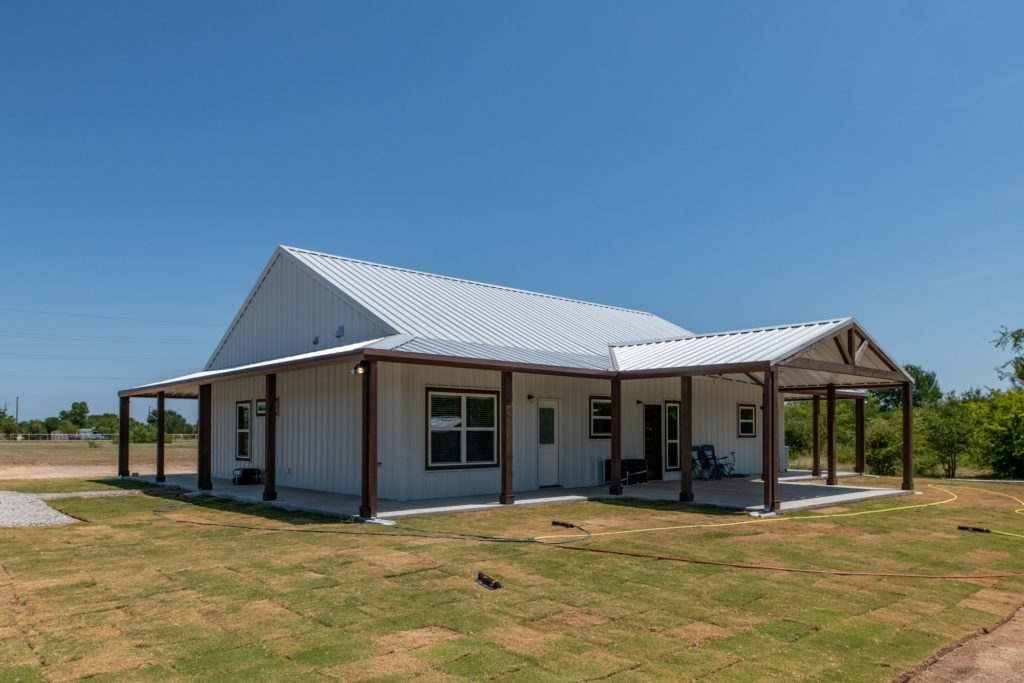
Barndominiums, or barn-style homes with big open interiors and often an attached shop, are popular in rural parts of many states, and California’s farm and ranch country is no exception. Most are now stick-framed (built with regular wood framing) rather than steel, which makes them easier to permit and finance. Check county rules early, since some areas treat them like any other house and others ask more questions.
How Much Does It Cost to Build a Home in California?
New Home Magazine estimates that building a home in California costs about $190–$290 per square foot for the house itself. For a 2,000-square-foot home, that works out to roughly $380,000–$580,000.
Several things push California costs up:
- Labor: Skilled trades are in high demand, especially in coastal metros.
- Seismic design: Earthquake-resistant framing, hold-downs, and engineering add cost.
- Energy code: California’s energy rules require high-efficiency features, and most new homes must include solar panels.
- Wildfire rules: In fire-prone areas, you may need fire-resistant roofing, siding, vents, and windows, plus cleared space around the house.
- Fees: Impact and permit fees can be high, especially in growing cities.
Costs are usually lower in the Central Valley and rural counties, and higher along the coast and in mountain resort areas.
Keep in mind that the per-square-foot number covers the house only. Land, site work (grading, driveways, utility hookups), a well and septic system if you’re off city services, and permits and fees are all extra. On a hillside or remote lot, site work alone can be a big number. To compare California with other states, see what it costs to build a new home in all 50 states.
Custom Home Builders in California
Here are a few builders across the state that build custom homes from the ground up:
- Lars Remodeling & Design (San Diego County): A design-build firm that builds new custom homes from the ground up and also does whole-home remodels.
- Smith Brothers Construction (San Diego County and North County coast): Designs and builds custom homes, including luxury homes built from the ground up.
- G.J. Gardner Homes (Central Valley, Sacramento, and Southern California offices): A franchise builder offering custom builds and house-and-land packages through local offices such as Clovis, Fresno, and Sacramento.
- Mark Tanner Construction (Truckee and Lake Tahoe): Builds custom homes around Truckee and the Lake Tahoe area.
- Mt. Lincoln Construction (Truckee and Lake Tahoe): Handles custom new home construction, remodels, and additions in the Truckee/Lake Tahoe area.
Before you sign with anyone, look up their license on the Contractors State License Board website, since California requires a state license for home construction. Ask for proof of liability and workers’ comp insurance, call recent clients, and visit at least one finished home to see the quality in person.
Construction Loans in California
A construction loan pays your builder in stages (called “draws”) as the house goes up, instead of handing over a lump sum. Many lenders offer a “construction-to-permanent” loan, which turns into a regular mortgage when the home is finished, so you only close once. You can learn more in our guide to how construction loans work.
Government-backed options include FHA construction loans (lower down payments), VA construction loans for eligible veterans, and USDA loans, which can work in rural parts of the state such as much of the Central Valley, the foothills, and the far north. Keep in mind that high home prices in parts of California can bump up against loan limits.
Lenders that offer construction loans in California include:
- AgWest Farm Credit: Offers an all-in-one construction loan that can cover buying land and building a home, with branches in California.
- Mechanics Bank: A California bank that offers construction-to-permanent home loans along with FHA and VA loans.
- Greater Nevada Mortgage: Offers construction and lot loans and is licensed to make home loans in California.
Property Taxes in California
California’s property taxes are moderate compared with other states, mostly because of Proposition 13. Under Prop 13, your home is taxed based on its value when you buy or build it, and that taxable value can only rise by a small amount each year, no matter how much the market climbs. New construction is reassessed when it’s finished, so your tax bill will be based on the land plus the value of the new house.
Many areas also add special assessments (sometimes called Mello-Roos in newer developments) to pay for roads, schools, and parks, so ask about those before you buy a lot. California offers a small homeowners’ exemption on your primary residence that you can claim with your county assessor.
Home Insurance in California
Insurance is one of the biggest issues for California homeowners right now. Several large insurers have cut back on new policies in wildfire-prone areas, and some homeowners end up on the California FAIR Plan, a last-resort policy that often needs a separate “wraparound” policy to fill the gaps.
Key risks to plan for:
- Wildfire: Building with fire-resistant materials and keeping defensible space can help you find coverage.
- Earthquake: Standard home policies don’t cover earthquakes. You’ll need a separate earthquake policy.
- Flooding and mudslides: Also not covered by standard policies; ask about flood insurance, especially near rivers or below burn scars.
Get insurance quotes before you buy land, not after, because the location can make or break your coverage. See our guide to home insurance for new homes for more tips.
Buying Land and Getting Permits in California
California has a statewide building code (the California Building Standards Code, often called Title 24), which every city and county enforces. Zoning is set locally, and even rural counties usually have zoning rules covering lot size, setbacks (how far the house must sit from property lines), and how many homes you can build.
Before you buy land, check:
- Fire hazard zone: Lots in high fire hazard areas come with extra building rules and can be harder to insure.
- Water: Find out if the lot has a public water hookup, a well, or water rights. In some areas, new wells face limits.
- Septic: County environmental health departments approve septic systems, usually after a soil test (perc test) that shows how well the ground absorbs water.
- Frost depth: Most of the state has shallow frost depth, but mountain areas can require much deeper footings.
- Coastal rules: Near the coast, you may need extra approval from the California Coastal Commission.
Our guide on how to buy land to build a house walks through the process step by step.
House Plans for Your California Home
Whether you want a Spanish-style home, a modern farmhouse, a mountain cabin, or a single-story ranch, you can browse plans for every style before you hire a builder. For barndominium and farmhouse-style designs, check out BarndominiumPlans.com, and for real-world barndo inspiration, visit Barndominium Life. Have your builder or designer confirm that any plan meets California’s energy and wildfire rules.
Final Thoughts
Building a home in California takes more paperwork, more planning, and a bigger budget than in most states. But with the right land, a licensed builder, and insurance lined up early, you can end up with a safer, more efficient home designed around the way you live.