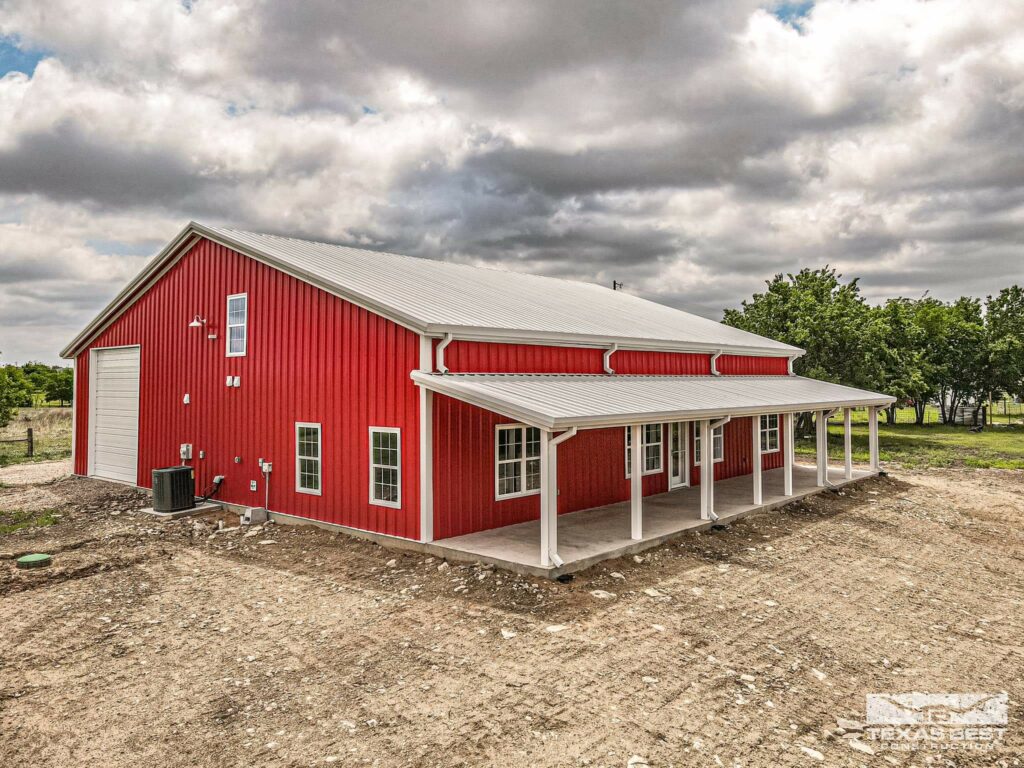
Insuring a brand-new home is usually easier — and often cheaper — than insuring an older one. New roofs, new wiring, new plumbing, and current building codes all mean fewer claims, and many insurers reward that with lower premiums. Here’s what coverage you need while you build and after you move in, plus our top picks for home insurance companies.
Insurance While You Build: Builder’s Risk
Before your home is finished, a regular homeowners policy won’t cover it. Instead, you need builder’s risk insurance, which covers the home and materials on site during construction against things like fire, wind, theft of materials, and vandalism.
- Who buys it? Sometimes the builder carries it; sometimes the owner does. Your contract should spell this out. If you’re financing with a construction loan, your lender will almost certainly require it.
- How long does it last? Usually for the length of construction, often written in terms of 3 to 12 months with extensions available.
- What it doesn’t cover: injuries on the job site (that’s the builder’s liability and workers’ compensation insurance) and poor workmanship.
Always ask your builder for proof of their general liability and workers’ compensation insurance before work starts.
Insurance After You Move In: Homeowners Insurance
Once construction is complete, you’ll switch to a standard homeowners policy. Your mortgage lender will require it. A typical policy covers:
- Dwelling: the house itself.
- Other structures: detached garages, shops, fences, and sheds.
- Personal property: your belongings.
- Liability: if someone is hurt on your property.
- Additional living expenses: a place to stay if a covered loss makes your home unlivable.
Coverage tip for new homes: insure your home for its replacement cost — what it would cost to rebuild today — not its market value or what you paid. Since you just built it, you have an excellent starting number. Ask about extended replacement cost, which adds a cushion (often 25% or more) in case building costs jump after a disaster.
Our Top Home Insurance Picks
Amica — Best for customer satisfaction
Amica ranked first among homeowners insurers in the J.D. Power U.S. Home Insurance Study in both 2025 and 2026, and has finished first in that category more than 20 times. It’s a strong choice if you value easy service and smooth claims. Amica also pays dividends to policyholders on certain policies.
Chubb — Best for high-value custom homes
Chubb specializes in higher-value homes and is known for generous coverage, including features like cash settlement options and broad replacement-cost coverage. Chubb ranked at the top of J.D. Power’s 2025 Property Claims Satisfaction Study. If you’re building a larger custom home with premium finishes, it’s worth a quote.
State Farm — Best for local agents
State Farm is the largest home insurer in the U.S. and has local agents in nearly every community. That’s helpful if you’re building in a rural area and want someone nearby who understands the local market. Bundling home and auto often brings meaningful discounts.
USAA — Best for military families
If you’re an active-duty service member, veteran, or eligible family member, USAA is consistently one of the best-rated home insurers for customer satisfaction. It’s only available to military members and their families.
Erie Insurance — Best regional option
If you live in one of the roughly dozen states, plus Washington, D.C., where Erie operates (mostly in the Mid-Atlantic and Midwest), it’s worth a quote. Erie is known for competitive prices and strong customer service ratings.
Insurance availability changes. In some states, especially Florida, California, and parts of the Gulf Coast, some major insurers have limited new policies because of storm and wildfire risk. An independent insurance agent who works with multiple companies can be especially helpful in those areas.
How to Save on Insurance for a New Home
- Ask for a new-home discount. Many insurers offer lower rates for newly built homes.
- Bundle your home and auto insurance with the same company.
- Choose impact-resistant roofing if you live where hail or high winds are common. Some states require insurers to offer discounts for it.
- Install monitored security and smoke alarms, water-leak sensors, and automatic water shutoff valves.
- Raise your deductible if you have savings to cover a bigger out-of-pocket cost.
- Build smart for your area. Hurricane straps, fire-resistant siding, and building above flood levels can lower premiums — and protect your home.
Don’t Forget Flood Insurance
Standard homeowners policies do not cover flooding. If you’re building in or near a flood zone, you’ll need a separate flood policy through the National Flood Insurance Program (NFIP) or a private insurer. Check FEMA’s flood maps for your lot before you buy land — it’s much easier (and cheaper) to avoid a flood zone than to insure against it.
Get Quotes Early
Start shopping for homeowners insurance while your home is still under construction. Getting quotes based on your plans lets you factor insurance costs into your budget — and sometimes reveals affordable design changes (like a different roof material) that lower your premium for years to come.
This article is general information, not insurance advice. Coverage, availability, and discounts vary by state and company.