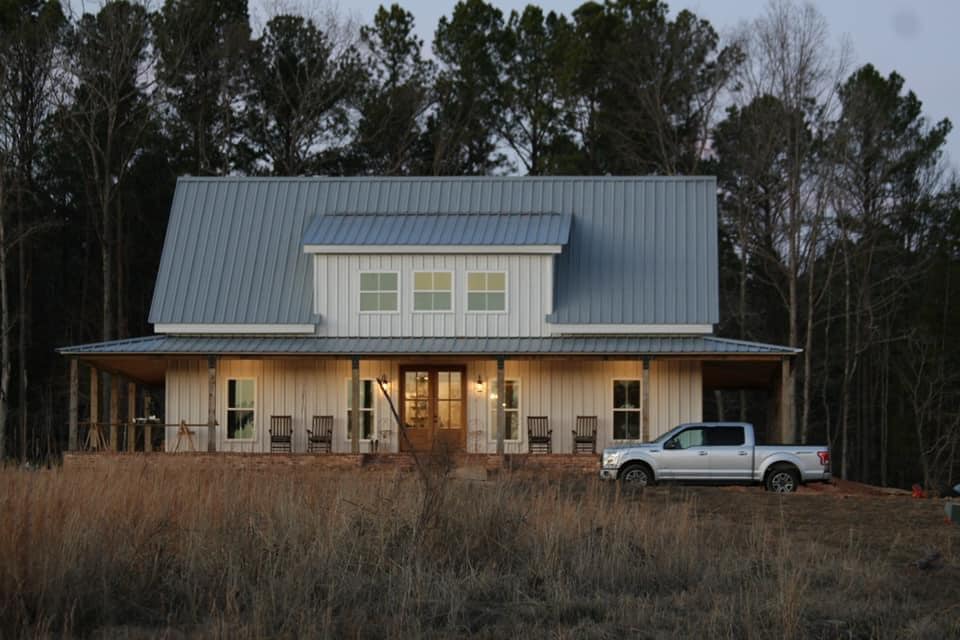
The short answer: building a typical new home in the U.S. costs roughly $150 to $300 per square foot for the house itself, or about $300,000 to $600,000 for a 2,000-square-foot home — before land and site work. Where you build is one of the biggest factors, which is why we’ve put together estimates for all 50 states below.
The National Picture
Two of the best sources on new home costs are the National Association of Home Builders (NAHB) and the U.S. Census Bureau:
- NAHB’s 2024 Construction Cost Survey found that construction costs for a typical new home averaged $428,215 — about 64% of the home’s sale price — for an average home of 2,647 square feet.
- Census data analyzed by NAHB shows the median custom home built on the owner’s land cost $166 per square foot in 2024, not counting the land.
Keep in mind that a “median” means half of homes cost more and half cost less. Custom homes with upgraded finishes, complex rooflines, basements, or in pricey metro areas routinely run well above that.
Cost by Region
Costs vary a lot by part of the country. Here are the 2024 median prices per square foot for custom homes built on the owner’s land, by Census region, according to NAHB:
- New England: $190
- Middle Atlantic (NY, NJ, PA): $188
- Great Lakes (IL, IN, MI, OH, WI): $186
- Mountain West: $169
- Pacific (CA, OR, WA, AK, HI): $167
- South Atlantic (DE to FL): $155
- West South Central (TX, OK, AR, LA): $138
- East South Central (AL, KY, MS, TN): $129
Estimated Cost to Build a New Home in All 50 States
The table below estimates the cost to build the house only — not the land — for a typical new single-family home with mid-range finishes.
| State | Typical cost per sq. ft. | Est. cost for a 2,000 sq. ft. home |
|---|---|---|
| Alabama | $135 – $205 | $270k – $410k |
| Alaska | $195 – $300 | $390k – $600k |
| Arizona | $175 – $265 | $350k – $530k |
| Arkansas | $140 – $215 | $280k – $430k |
| California | $190 – $290 | $380k – $580k |
| Colorado | $190 – $285 | $380k – $570k |
| Connecticut | $220 – $335 | $440k – $670k |
| Delaware | $180 – $275 | $360k – $550k |
| Florida | $160 – $245 | $320k – $490k |
| Georgia | $155 – $235 | $310k – $470k |
| Hawaii | $205 – $310 | $410k – $620k |
| Idaho | $175 – $265 | $350k – $530k |
| Illinois | $215 – $330 | $430k – $660k |
| Indiana | $185 – $280 | $370k – $560k |
| Iowa | $165 – $255 | $330k – $510k |
| Kansas | $160 – $245 | $320k – $490k |
| Kentucky | $140 – $215 | $280k – $430k |
| Louisiana | $145 – $225 | $290k – $450k |
| Maine | $180 – $275 | $360k – $550k |
| Maryland | $175 – $270 | $350k – $540k |
| Massachusetts | $225 – $340 | $450k – $680k |
| Michigan | $195 – $295 | $390k – $590k |
| Minnesota | $190 – $290 | $380k – $580k |
| Mississippi | $130 – $200 | $260k – $400k |
| Missouri | $175 – $265 | $350k – $530k |
| Montana | $175 – $270 | $350k – $540k |
| Nebraska | $160 – $245 | $320k – $490k |
| Nevada | $190 – $295 | $380k – $590k |
| New Hampshire | $185 – $280 | $370k – $560k |
| New Jersey | $205 – $315 | $410k – $630k |
| New Mexico | $170 – $260 | $340k – $520k |
| New York | $205 – $315 | $410k – $630k |
| North Carolina | $155 – $235 | $310k – $470k |
| North Dakota | $165 – $250 | $330k – $500k |
| Ohio | $185 – $285 | $370k – $570k |
| Oklahoma | $145 – $220 | $290k – $440k |
| Oregon | $165 – $250 | $330k – $500k |
| Pennsylvania | $180 – $275 | $360k – $550k |
| Rhode Island | $210 – $320 | $420k – $640k |
| South Carolina | $150 – $230 | $300k – $460k |
| South Dakota | $155 – $240 | $310k – $480k |
| Tennessee | $135 – $210 | $270k – $420k |
| Texas | $145 – $220 | $290k – $440k |
| Utah | $175 – $265 | $350k – $530k |
| Vermont | $180 – $275 | $360k – $550k |
| Virginia | $165 – $250 | $330k – $500k |
| Washington | $170 – $260 | $340k – $520k |
| West Virginia | $160 – $245 | $320k – $490k |
| Wisconsin | $195 – $300 | $390k – $600k |
| Wyoming | $170 – $260 | $340k – $520k |
How we built these estimates
The government doesn’t publish construction costs state by state, so these numbers are New Home Magazine estimates, not official figures. Here’s how we got them:
- We started with the 2024 Census median custom-home price per square foot for each of the nine regions listed above.
- We adjusted each state up or down within its region based on general differences in local labor and material costs. For example, Massachusetts runs higher than Maine, and Alaska and Hawaii run higher than the rest of the Pacific region because nearly everything has to be shipped in.
- The low end of each range is close to that median, adjusted slightly upward for cost increases since 2024. The high end reflects homes with upgraded finishes, more complex designs, or locations in higher-cost metro areas.
A few results may surprise you. Midwestern states like Indiana and Ohio show higher costs than Florida or Georgia. That’s what the Census data shows: Great Lakes custom homes are often built with basements and to colder-climate standards, while Southern homes are usually built on simple concrete slabs.
Use these numbers for early budgeting only. Your actual cost depends on your specific plan, finishes, builder, and site. The only way to get a real number is to get bids from local builders using your actual house plan.
Costs That Aren’t in the Table
The per-square-foot numbers above cover the house. When you build on your own lot, you’ll also pay for things a production builder normally rolls into the price:
- Land. Varies from a few thousand dollars an acre in rural areas to six figures for a lot near a city.
- Site work. Clearing, grading, and building a driveway. A flat, open lot costs far less than a wooded or sloped one.
- Utilities. If public water and sewer aren’t available, you’ll need a well and septic system. Bringing in electric service from the road can also add up on a long driveway.
- Permits and fees. Building permits, inspections, and in some areas impact fees charged by the town or county.
- Plans and engineering. A ready-made house plan costs far less than hiring an architect from scratch, though you may still need a local engineer to stamp it.
- Landscaping, fencing, and outbuildings.
A good rule of thumb is to set aside a meaningful cushion — many builders suggest 10% to 20% — on top of your house budget for site costs and surprises.
What Drives the Cost of Building a Home
- Size. Bigger homes cost more overall, though the cost per square foot often drops slightly as homes get larger.
- Shape and roofline. A simple rectangle with a simple roof is the cheapest shape to build. Every corner, bump-out, and roof valley adds cost.
- Foundation. A concrete slab is usually cheapest; a full basement adds significantly.
- Number of stories. A two-story home has a smaller foundation and roof for the same living space, which can save money compared to a sprawling single-story.
- Finishes. Cabinets, countertops, flooring, windows, and fixtures are where budgets most often blow up.
- Labor market. Areas with a shortage of skilled trades cost more.
How to Keep Your Build on Budget
- Pick your plan with your budget in mind. A smart, efficient floor plan saves more money than any other single decision.
- Get at least three builder bids on the same plan and specifications so you can compare apples to apples.
- Decide on finishes before you sign. Changes during construction are the most expensive changes.
- Line up financing early. A construction loan lender will review your plan, budget, and builder before approving the loan, which is a helpful reality check.
Building on your own lot takes more planning than buying a tract home — but you get the land, the layout, and the finishes you actually want, often for less than you’d think.
Sources: National Association of Home Builders, “Cost of Constructing a Home” (2024 survey) and Eye on Housing analysis of U.S. Census Bureau Survey of Construction data, 2024.