Minnesota attracts people who want strong schools, plenty of lakes and woods, and room to spread out without leaving the reach of the Twin Cities. Families moving to the outer suburbs, people building a year-round home at the lake, and buyers who want acreage in farm country all build here. This guide covers costs, builders, loans, taxes, insurance, and the land and permit steps to plan for.
Why Build a New Home in Minnesota
The land is varied. The “Land of 10,000 Lakes” has prairie and farmland in the south and west, the Red River Valley along the North Dakota border, big forests and lake country through the central and northern parts of the state, and the North Shore of Lake Superior. About a third of the state is forested, and lakefront or wooded lots are a big reason people choose to build here.
The climate is continental, with warm summers and long, cold, snowy winters. That shapes everything about a new home in Minnesota: deeper foundations, heavy insulation, roofs built for snow, and a shorter outdoor building season, so it pays to plan your timeline around the ground thawing.
Most growth is around the Twin Cities. The outer-ring suburbs and exurbs in Wright, Sherburne, Scott, Carver, Anoka, Washington and Dakota counties see a lot of new construction. Rochester is growing thanks to its medical economy, St. Cloud and Mankato are regional hubs, and the Brainerd Lakes and Alexandria areas are popular for lake homes and retirement.
Types of New Homes in Minnesota
There’s more than one way to get a new home here. For a full comparison, see our guide to types of new homes.
Custom Homes on Your Own Lot
This is the most flexible option and a great fit for Minnesota, where many people want a specific lake lot, wooded parcel or acreage. You buy the land (or already own it), choose or design a plan, and hire a builder. You control the layout, the finishes, and how the house sits on the land to catch views and sun.
Builder and Tract Communities
Production builders work in planned neighborhoods, mostly in the Twin Cities suburbs and around Rochester and St. Cloud. You choose from set floor plans and option packages. It’s often faster and more predictable, but you give up most choices about the lot and design.
Manufactured and Modular Homes
Manufactured homes are factory-built to a federal HUD code and are the most affordable way into a new home. Modular homes are also built in a factory but meet the same codes as site-built houses and sit on a permanent foundation, usually a full basement in Minnesota. They’re a good fit for the short building season because much of the work happens indoors.
Barndominiums
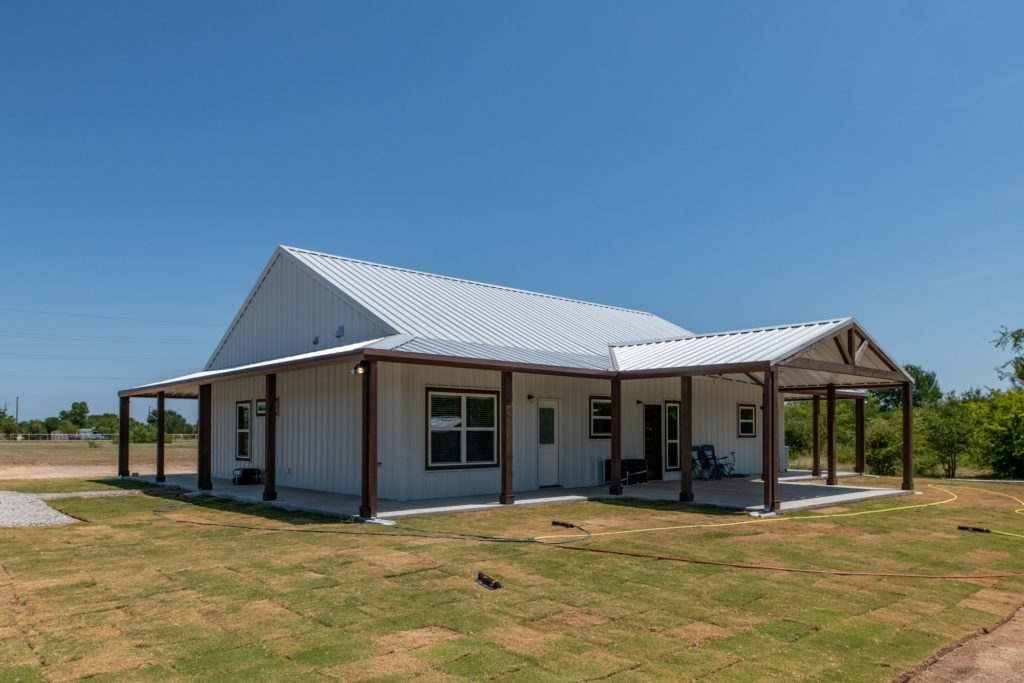
Barndominiums (barn-style homes, often with a big shop or garage attached) are popular in rural parts of many states, including Minnesota’s farm country. Most are now stick-framed like a regular house and finished with metal siding and roofing, which makes them easier to finance, insure and insulate for Minnesota winters.
How Much Does It Cost to Build a Home in Minnesota?
New Home Magazine estimates that building a new home in Minnesota costs about $190–$290 per square foot for the house itself. For a 2,000-square-foot home, that’s roughly $380,000–$580,000. These are our estimates; the plan, the finishes and the builder all affect your actual cost.
What drives Minnesota costs:
- Frost depth: Footings must go below the frost line, which ranges from about 42 inches in the south to 60 inches in the north. Many homes add a full basement since you’re digging deep anyway.
- Cold-climate building: Minnesota’s energy code calls for heavy insulation and tight construction, and roofs must handle significant snow loads.
- Labor market: The Twin Cities metro is the most expensive area for labor. Rural areas can be cheaper, but builders may be booked out.
- Remote sites: Northern lake lots can add costs for access roads, delivery and winter work.
Land, site work, a well and septic system, utility hookups and permits are all extra. To compare states, see what it costs to build a new home in all 50 states.
Custom Home Builders in Minnesota
Here are some Minnesota builders that build custom homes on land their clients own:
- SW Wold Construction (north and northwest Twin Cities): Builds custom homes in communities like Monticello, Andover and Zimmerman and in Isanti County, with a build-on-your-lot program.
- Price Homes (multiple regions): Builds custom homes in the Twin Cities metro, Rochester, Alexandria and the Brainerd Lakes area, including on clients’ lots.
- Homes by Tradition (Lakeville, south metro): Designs and builds custom homes across the south Twin Cities, including on privately owned land and acreage.
- Noble Custom Homes (St. Cloud and central Minnesota): A custom builder and general contractor that will build on your lot or one of theirs.
Minnesota requires residential building contractors and remodelers to be licensed by the Department of Labor and Industry, and you can look up a license on the department’s website. Also confirm the builder carries liability and workers’ comp insurance, call a few past clients, and ask to tour a home they’ve finished, ideally one that has been through a winter.
Construction Loans in Minnesota
A construction loan pays your builder in stages (called draws) as the work is done. You usually make interest-only payments while the house is being built, and many lenders offer a one-time close loan that turns into a regular mortgage when you move in. Read more about how construction loans work.
FHA and VA construction loans are options if you qualify, and USDA loans can help buyers in rural parts of Minnesota, which includes most of the state outside the Twin Cities and the larger regional cities. Lenders offering construction financing in Minnesota include:
- MinnStar Bank: A southern Minnesota bank with a Mankato office that offers construction loans along with FHA, VA and USDA mortgages.
- Security Bank & Trust Co.: Has offices in 18 Minnesota communities west and north of the Twin Cities and offers lot, new construction and bridge loans.
- Rural 1st: Offers construction loans for rural properties in Minnesota through AgCountry Farm Credit Services.
Property Taxes in Minnesota
Minnesota’s property taxes are about average nationally, though they’re higher in some metro suburbs and lower in many rural areas. Your bill is based on your home’s estimated market value set by the county assessor, plus the combined levies of your county, city or township, school district and other local districts.
If the home is your main residence, apply for homestead status with your county. Homesteaded homes get a lower tax classification and a market value exclusion that reduces the taxable value of most homes. Minnesota also has a property tax refund program for homeowners whose taxes are high compared with their income.
Home Insurance in Minnesota
Minnesota’s biggest risks are hail, severe thunderstorms, tornadoes in the south and west, heavy snow and ice, and spring flooding along rivers like the Red River and the Minnesota River. Hail is one of the biggest drivers of insurance claims in the state.
Practical tips:
- Ask about impact-resistant roofing. Some insurers offer discounts for Class 4 shingles or metal roofing, which also stand up better to hail.
- Plan for ice dams. Good attic insulation and ventilation help prevent them, and you should know what your policy covers for water damage.
- Flooding isn’t covered by standard policies. If you’re near a river or lake, price out flood insurance.
- Get a builder’s risk policy while the home is under construction.
For more, see our guide to home insurance for new homes.
Buying Land and Getting Permits in Minnesota
Most Minnesota land falls under city or county zoning, but rules in rural townships can be lighter, and some townships handle their own zoning. Lakefront lots come with extra shoreland rules about setbacks from the water, lot coverage and tree removal, so check with the county before you buy.
If the property isn’t on city sewer, you’ll need a septic system, which Minnesota calls a subsurface sewage treatment system (SSTS). A licensed designer tests the soil to see what kind of system will work, and counties issue the permits. Make your land purchase contingent on a passing soil evaluation. Remember to plan for the deep frost line when budgeting foundation work.
The Minnesota State Building Code is based on the International Residential Code. It’s enforced in the Twin Cities metro and in cities and counties that have adopted it, while some rural areas have no local building inspections. The state energy code applies statewide. Ask your county what permits apply. For more on choosing land, read how to buy land to build a house.
House Plans for Your Minnesota Home
Whether you want a lake cabin, a walkout rambler or a two-story farmhouse, you can browse plans for every style before you meet with a builder. For barndominium and farmhouse-style designs, check out BarndominiumPlans.com. For more barn-style ideas, Barndominium Life is a good source of inspiration.
Final Thoughts
Building in Minnesota takes some planning around winter, deep foundations and lake rules, but the reward is a home built for the climate on the land you want. Line up your land, soil tests and a licensed builder early, and you’ll be ready to break ground once the frost is out.